The Ultimate Venice Travel Guide: Best Tips,Costs & Itinerary 2026

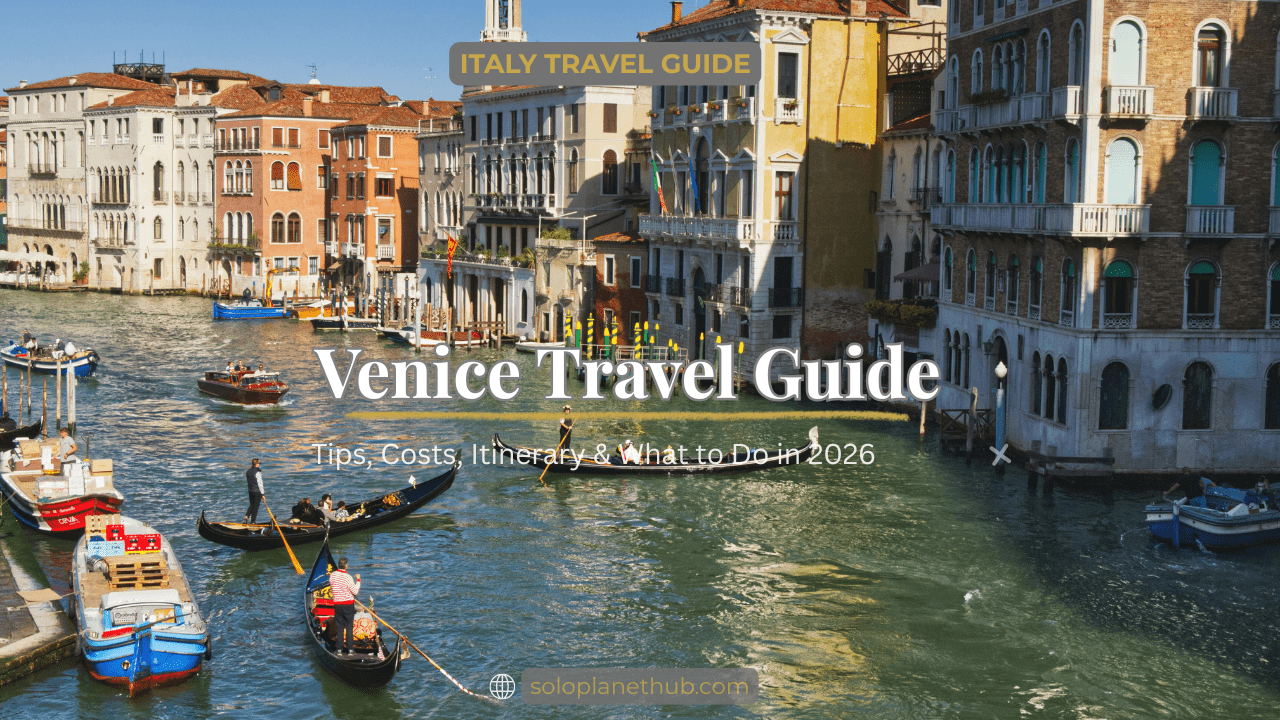
This Venice travel guide covers everything you need for a first visit. Venice is an Italian city built on 118 islands, famous for its canals and Gothic architecture. Budget from €80 per day. Plan for at least 3 days. Venice is unlike any other city in the world. It sits in a shallow lagoon on the Adriatic Sea. It is built on 118 small islands connected by more than 400 bridges and a network of canals. There are no cars, no roads, and no traffic lights. The only ways to get around are on foot or by water.
This Venice travel guide is built for first-time visitors. It covers everything in one place what to do, where to stay, what to eat, how to get around, how much to budget, and what mistakes to avoid. Every fact here is verified from official Italian government and tourism sources.. It is one of the most visited cities in all of Europe.
Many first-time visitors ask the same questions. How many days do you really need in Venice? What should you not miss? What is a must-eat in Venice? What are the dos and don’ts? This Venice travel guide answers all of those questions in one place.
You will find everything you need here. Everything is based on verified facts from official and credible sources. If you are planning a broader Italy trip, also read our guides on unusual things to do in Florence Let’s start with the basics.
Table of Contents
Venice Travel Guide: Key Facts and City Overview
Venice is the capital city of the Veneto region in northeastern Italy. It is made up of 118 small islands separated by canals and connected by over 400 bridges. The city has no roads for cars. All movement happens on foot or by water. The historic centre of Venice is listed as a UNESCO World Heritage Site. The city is also known as “La Serenissima,” meaning The Most Serene, a title it held during its centuries as a powerful maritime republic.
Venice is divided into six official districts called sestieri: San Marco, Cannaregio, Castello, Dorsoduro, San Polo, and Santa Croce. Each has its own character and atmosphere.
FACTS
Country: Italy (Veneto Region)
Language: Italian (Venetian dialect also spoken)
Currency: Euro (€) cards accepted nearly everywhere
Airport: Venice Marco Polo Airport (IATA: VCE)
Number of Islands: 118
Bridges: 400+
Day Visitor Entry Fee: €5–€10 (April–July, peak days only)
Emergency Number: 113 (Police) | 118 (Medical)
IMPORTANT NOTE:
Since January 2023, Venice has charged a day visitor entry fee of €5 to €10 per person (ages 6 and above) on high-traffic days between April and July, between 8:30 a.m. and 4 p.m. Overnight guests are exempt. Fines for non-payment range from €50 to €300, as confirmed by the Venice municipality official website.
Venice Travel Guide: Top 10 Things to Do in Venice
This section of the Venice travel guide covers the most important sights and activities. Each entry includes verified entry costs and practical tips. best Venice tours and activities on Get Your Guide
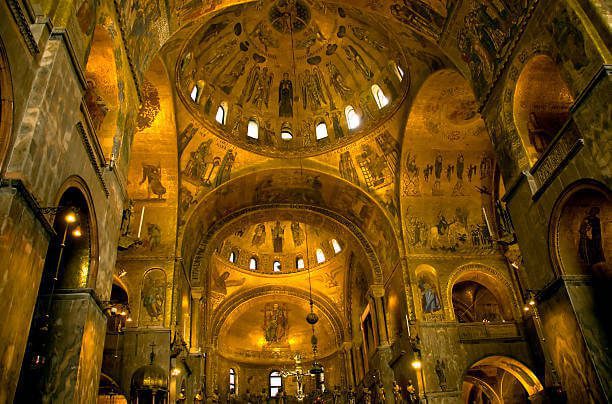
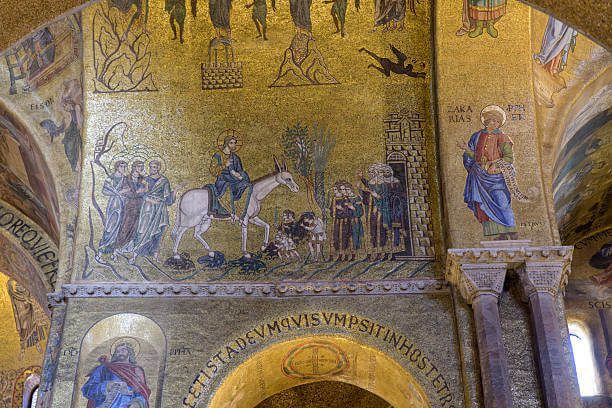
Venice Travel Guide to St. Mark’s Basilica
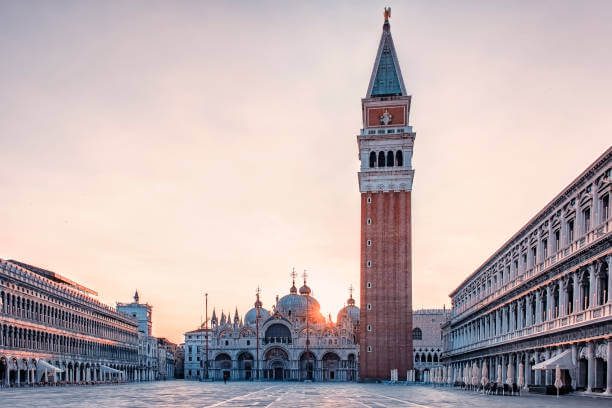
St. Mark’s Basilica is the most important religious building in Venice. It was built in 1063 CE on the site of an earlier 9th-century church. The interior features 8,000 square metres of gold mosaics and five Byzantine domes. The basilica holds the remains of Saint Mark, the patron saint of Venice.
The building is located in Piazza San Marco, the main square of Venice. It is one of the finest examples of Byzantine architecture in all of Europe. Entry costs €3. A skip-the-line ticket costs €6. The full complex ticket, which includes the Pala d’Oro, the Museum, and the Loggia dei Cavalli terrace, costs €20 and includes skip-the-line entry. visiting islands near Venice unique things to do in Venice . Practical tip: Visit before 9 a.m. to avoid the largest queues. The Piazza is almost empty at that hour and significantly more enjoyable. Entry fee: €3 standard | €6 skip-the-line | €20 full complex ticket
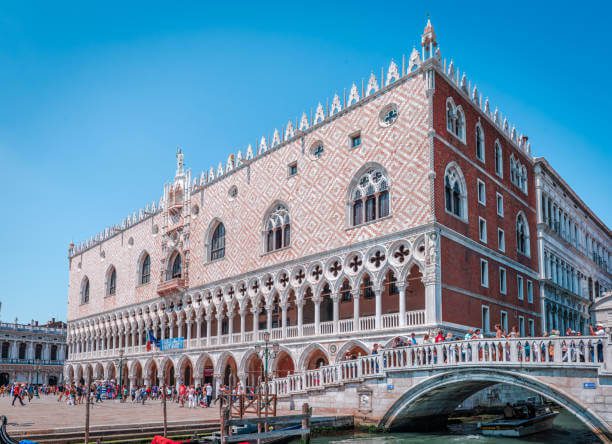
Tour the Doge’s Palace (Palazzo Ducale)
The Doge’s Palace was the seat of Venetian government for over 500 years. It was built in the 14th century in the Venetian Gothic style. The palace contains the Senate chamber, the Council of Ten chamber, a historic prison, and the Bridge of Sighs.
The interior holds paintings by Tintoretto and Titian. The “Secret Itineraries” guided tour adds access to private rooms, archives, and the cell from which Casanova escaped in 1756. This tour is available to book through the official Palazzo Ducale website.
- Booking more than 30 days in advance saves €5 on the entry fee.
- Entry fee: €25 (booked 30+ days in advance) | €30 (booked within 30 days)
- Opening hours: Extended to 11 p.m. on Friday and Saturday in May through September
Take a Gondola Ride
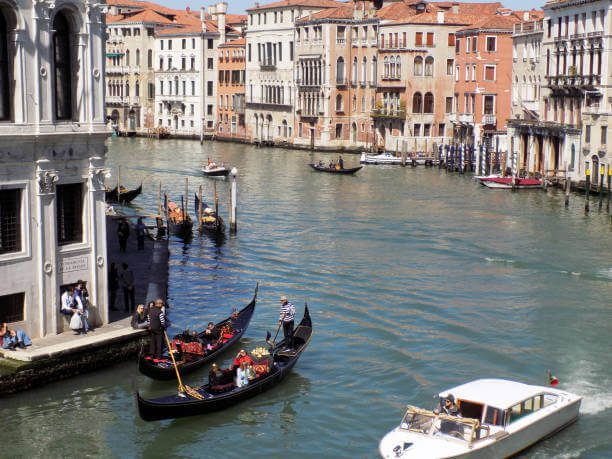
Gondola rides are one of the most recognisable experiences in Venice. Prices are regulated by the City of Venice and are non-negotiable under Italian municipal law.
A standard daytime gondola ride (9 a.m. to approximately 7 p.m.) costs €90 per boat for 30 minutes. An evening gondola ride costs €110 per boat for 35 minutes. The price is per boat, not per person. Up to five passengers can share one boat. There is no expectation of a tip, though it is not prohibited.
The best starting points for a gondola ride are in Dorsoduro, San Polo, or Cannaregio. These neighborhoods offer access to quieter side canals that most tourists never see. Avoid starting near Rialto Bridge or Piazza San Marco the canals there are crowded and noisier
Entry fee: €90 (daytime, 30 min) | €110 (evening, 35 min) per boat
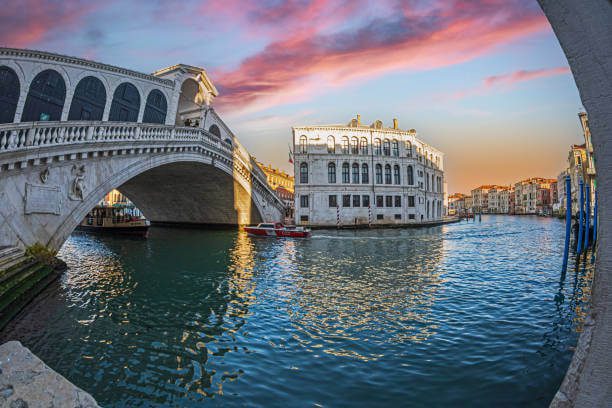
Walk Across the Rialto Bridge
The Rialto Bridge is the oldest of the four bridges crossing the Grand Canal. The current stone structure was completed in 1591 by architect Antonio da Ponte. It connects the San Marco and San Polo districts at the narrowest point of the Grand Canal.
The bridge has been the centre of commercial activity in Venice for over 700 years. The Rialto Market, located just northwest of the bridge in San Polo, has operated continuously since the 11th century.
Visit at sunrise for the best photographs without crowds. The market opens in the early morning and is best visited before 9 a.m.
Entry fee: Free
Climb the St. Mark’s Campanile
The Campanile is the bell tower of St. Mark’s Basilica. It stands 98.6 metres tall and is the tallest structure in the Venice historic centre. The original tower was built in the 10th century and collapsed in 1902. The current tower is an exact reconstruction completed in 1912.
An elevator takes visitors to the top for 360-degree views over Venice, the Venetian Lagoon, and on clear days, the Dolomite mountains.
Entry fee: €10 | Combined with Basilica Museum: €15–€20
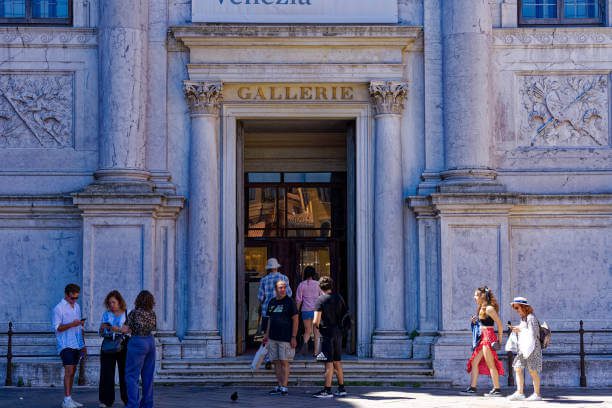
Explore the Gallerie dell’Accademia
The Accademia is Venice’s main art museum. It was established in 1750 under Napoleon Bonaparte. The collection holds Venetian art from the 14th to 18th centuries, with key works by Giovanni Bellini, Tintoretto, and Titian.
Leonardo da Vinci’s Vitruvian Man ink drawing is housed here. It is rarely displayed due to light sensitivity and the fragile condition of the paper. Discounted entry of €10 is available if you arrive between 8:15 a.m. and 9:00 a.m.
Entry fee: €15 standard | €10 (early entry 8:15–9:00 a.m.)
Visit the Peggy Guggenheim Collection
The Peggy Guggenheim Collection is one of the most important modern art museums in Europe. It is located in Peggy Guggenheim’s former canal-side residence in Dorsoduro. The collection includes over 200 works by Pablo Picasso, Salvador Dalí, and Jackson Pollock, among others.
Book tickets in advance. The museum regularly sells out during summer months.
Entry fee: €16 | Online booking fee: €1
Attend Venice Carnival (Carnevale di Venezia)
Venice Carnival takes place for 10 days in February, ending on Mardi Gras (Shrove Tuesday). The tradition dates to the 12th century. It was paused for nearly 200 years during Austrian rule and was officially revived in 1979.
Millions of visitors attend each year. Traditional masquerade balls are held in historic Venetian palaces throughout the festival period. Accommodation fills up months in advance.
Entry fee: Free for public events | Masquerade balls vary
Discover the Jewish Ghetto (Ghetto Ebraico di Venezia)
Venice’s Jewish Ghetto in Cannaregio is recognised as the world’s first ghetto. It was established in 1516. The area contains synagogues, the Museo Ebraico di Venezia, kosher restaurants, and independent shops.
The museum offers guided tours in multiple languages, including English. The tour includes a visit to the historic synagogues on the upper floors of the buildings.
Entry fee: ~€10 including guided synagogue tour
Take a Food Tour or Cicchetti Walk
A guided food tour is one of the most effective ways to understand Venetian cuisine. Local guides lead visits to bacari (wine bars) and markets, explaining the history and culture behind each dish.
The most authentic food areas in Venice are Fondamenta della Misericordia in Cannaregio and Rio di San Trovaso in Dorsoduro. Tours typically include cicchetti, wine, and a Spritz.Food tour prices: From €91 per person
Plan ahead and skip the queues. For the most popular sights like St. Mark’s Basilica and Doge’s Palace, booking in advance saves hours of waiting. Visit the official Venice tourism booking page to reserve your entry tickets before you arrive. Early booking also qualifies for discounted entry at the Doge’s Palace (€5 cheaper when booked 30+ days in advance).
Venice Neighborhoods (Sestieri) Guide
Venice is divided into six official districts called sestieri. Understanding each one helps you choose where to stay and where to spend your time. Most tourists only visit San Marco and miss the other five entirely.
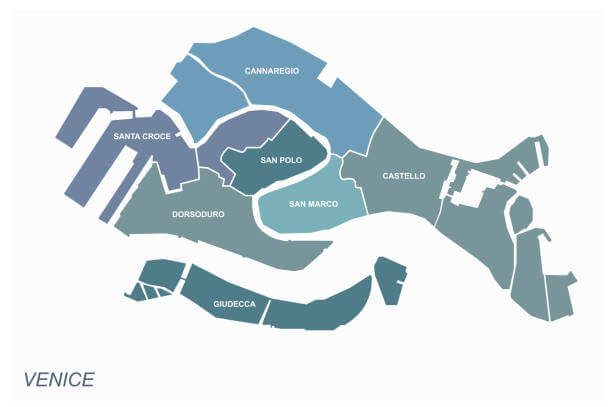
San Marco Most Touristed District
San Marco is home to St. Mark’s Basilica, Doge’s Palace, and Piazza San Marco. It is the most visited district in Venice. Between 10 a.m. and 7 p.m., the streets are packed. Arrive before 9 a.m. for a quieter experience. Accommodation here is the most expensive in the city.
Cannaregio Best for Local Life and Food
Cannaregio is the largest of the six sestieri. It is located in the northern part of the city. It contains the historic Jewish Ghetto and the Fondamenta della Misericordia, which is widely considered the best street in Venice for cicchetti bars and local restaurants. It is a strong contrast to the crowded San Marco area.
Dorsoduro Best for Art and Atmosphere
Dorsoduro is home to the Accademia Gallery, the Peggy Guggenheim Collection, and the Basilica di Santa Maria della Salute. It has a strong university presence through the Università Ca’ Foscari. The neighborhood has a lively café and bar scene and is one of the most liveable areas in Venice.
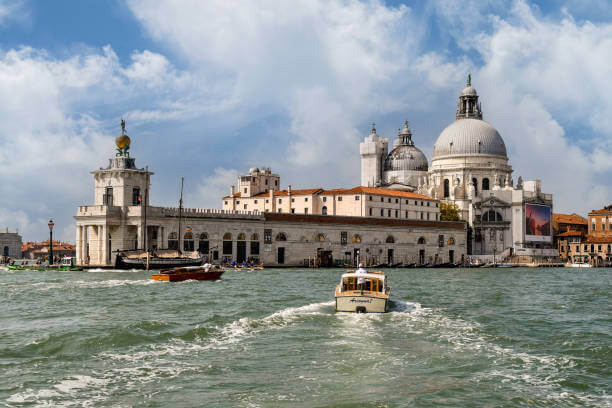
San Polo Heart of the City
San Polo is the smallest sestiere but one of the most central. It contains the Rialto Bridge and the Rialto Market. It is a good base for exploring multiple neighborhoods on foot. The further southwest you walk, the quieter and more residential it becomes.
Castello Largest Sestiere
Castello is the largest district by area. It contains Palazzo Tetta, the only palace in Venice bordered by canals on three sides, and the Libreria Acqua Alta bookshop. The district becomes quiet and genuinely local the further east you travel from San Marco.
Santa Croce Least Touristed
Santa Croce is the least visited of all six districts. It borders Cannaregio and is located near the main bus terminal at Piazzale Roma. It contains the Church of San Simeon Piccolo, visible from the water as you arrive by boat or train. Very local in character. If you only have limited time, our one-day Venice Italy itinerary covers the most important stops across these districts efficiently.
Venice Travel Guide to Day Trips: Burano, Murano, and Verona
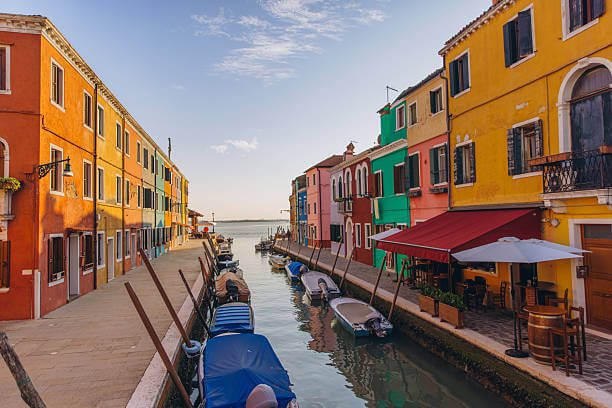
Burano Island Venice Travel Guide Day Trip
Burano is located 7 kilometres north of Venice in the Venetian Lagoon. The island is home to fewer than 3,000 residents. It is known for two things: brightly coloured houses and traditional lace-making.
The house colours on Burano are regulated by the local municipal government. Residents must apply for permission before repainting. This protects the visual character of the island.
The Museo del Merletto (Lace Museum) documents the island’s centuries-old lace-making tradition. Entry costs €5. The museum is located inside a historic Gothic palace on the main square.
The vaporetto journey from Fondamenta Nove takes approximately 45 minutes. The island measures less than one square mile and can be explored fully in a morning.
Murano Island
Murano is located 1.5 kilometres north of Venice. Venetian glassblowers were relocated to Murano in 1291 to reduce fire risk in the main city. Today the island is the historic centre of Venetian glass-making.
Authentic Murano glass is protected and carries a certification label under Italian law. A significant amount of glass sold on the island is imported and not authentic. Avoid purchasing from shops that cannot confirm the certification.
The vaporetto from Fondamenta Nove takes approximately 10 minutes.
Verona Day Trip by Train
Verona is a historic city in the Veneto region. It is reachable by high-speed train in 1 hour 15 minutes. The city contains a 1st-century Roman arena, a UNESCO-listed medieval centre, and several viewpoints over the Adige River. Book train tickets in advance for the cheapest fares.
Where to Stay in Venice
Venice has a wide range of accommodation options. Prices are higher than most Italian cities. They increase significantly in summer (June to August) and during Carnival in February.
The best areas to stay for a balance of price, local atmosphere, and accessibility are Dorsoduro and Cannaregio. Avoid staying in San Marco if you are on a budget it is consistently the most expensive district.
ACCOMMODATION COST
- Hostel dorm bed: €33–€60 per night (add €10–€20 in summer)
- Hostel private room: €95–€160 per night
- Budget hotel (double room): €80–€105 per night (doubles in summer)
- Airbnb private room: €90–€110 per night
- Airbnb full apartment: €125–€150 per night
- Campsite (mainland): €25–€30 per night | Cabins: €40–€50
- Luxury hotel: €300–€1,000+ per night
Venice Food Guide
Venetian cuisine is primarily seafood-based. It reflects the city’s location on the Adriatic Sea. It is significantly different from the pasta and pizza-focused food of central and southern Italy.
First-time visitors who eat only pizza and lasagne in Venice miss the most authentic local dishes entirely. The best version of Venice’s food culture is found at bacari traditional wine bars not at sit-down restaurants in the tourist centre. If you want to experience Venetian cicchetti and local wine bars with an expert guide,book the eat-like local venic-food tour with-wine spritz

Cicchetti
Small, bite-sized snacks served at bacari (wine bars). Similar in concept to Spanish tapas. They are consumed in the afternoon with wine or a Spritz. This is the most authentic Venetian eating experience. Typical cost: €1–€3 per piece.
Sarde in Saor
Fried sardines marinated in a sweet-sour sauce made with onions, vinegar, pine nuts, and raisins. A classic Venetian dish with roots in medieval food preservation methods.
Seppie al Nero
Cuttlefish cooked in its own black squid ink and served with polenta. Cuttlefish (seppie) are caught in the Venetian Lagoon. The sauce is built from a sofrito base with the ink added at the end of cooking. A dish that is unique to the Veneto coast.
Tramezzini
Soft triangular sandwiches with a range of fillings including tuna, cheese, vegetables, and cured meats. A Venetian street food staple found in cafés throughout the city. One of the fastest and most affordable lunch options.
Spritz Veneziano
Venice’s signature aperitivo drink. Made with prosecco, sparkling water, and bitter liqueur. Select is the local liqueur of choice. Aperol is sweeter. Campari is more bitter. Available at nearly every bacaro for €2–€4.
Prosecco
A sparkling white wine produced in the Veneto region. DOC and DOCG certified prosecco from the Treviso hills is the authentic local variety. Available by the glass from €3.
What Sweets Is Venice Known For? Venice Food Guide to Desserts
Baicoli: A thin, dry biscuit made with butter and yeast. Traditionally eaten dipped in coffee or wine. Baicoli have been produced in Venice for centuries and are considered the city’s signature sweet biscuit.
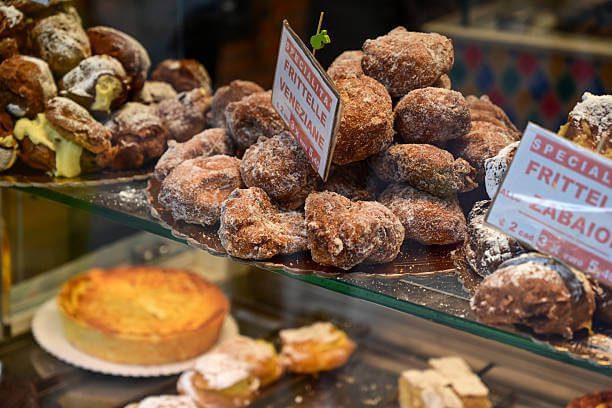
Fritelle Veneziane: Fried dough balls filled with cream, raisins, or pine nuts. Most common during Carnival season. Originally a peasant food, now a widely celebrated Venetian tradition.
Bussolai Buranelli: Butter biscuits from Burano island. S-shaped or ring-shaped. Made with flour, butter, eggs, and sugar. A popular souvenir to bring home from a day trip to Burano.
Tiramisu: Although not exclusive to Venice, the dessert has strong ties to the Veneto region. Many food historians trace its origin to the city of Treviso, just 30 kilometres from Venice. Several shops in Venice sell traditional versions made with mascarpone, espresso, and savoiardi biscuits.
Gelato: Venice has a strong gelato culture. Authentic artisan gelato shops (gelaterie artigianali) are found throughout the city. Avoid places with gelato piled high in metal containers that is a sign of industrial production. Look for shops displaying gelato in covered, flat pans.
Where to Eat in Venice
Avoid all restaurants on Piazza San Marco. Prices are two to three times higher than elsewhere and quality is not proportional.The best eating streets in Venice are:
Fondamenta della Misericordia Cannaregio. The best strip in the city for cicchetti bars, local wine shops, and affordable sit-down restaurants.
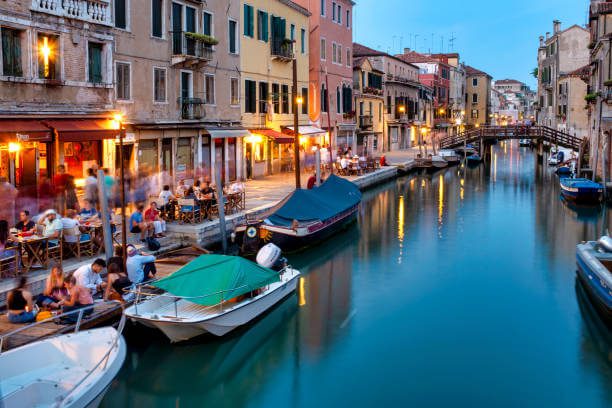
Rio di San Trovaso Dorsoduro. Recommended by locals for cicchetti and wine. Osteria Al Squero is one of the most consistently recommended bacaro on this street.
If you are also visiting Rome on your Italy trip, our food in Rome Italy guide covers the best Roman dishes and restaurants in the same depth.
Budget tip: A full cicchetti meal at a bacaro with wine costs €10–€15 per person. This is both more affordable and more authentic than a sit-down tourist restaurant.
Venice Travel Guide: Venice Transport Guide
Venice has no roads or motor vehicles inside the historic centre. All transport is on foot or by water. This section of the Venice travel guide explains every option clearly.
Getting to Venice from the Airport Venice Transport Guide
Venice Marco Polo Airport (IATA: VCE) is on the mainland, approximately 13 kilometres from the city centre. Three options connect the airport to Venice:
TRANSPORT
- Option 1 Alilaguna Blu water bus: Journey ~75 min
- Cost €18 one-way
- Best for: most tourists
- Notes: Runs on schedule, drops at vaporetto stops throughout the city
- Option 2 ATVO Bus: Journey ~25 min to Piazzale Roma
- Cost €8–€10
- Best for: budget travellers
- Notes: Then walk or take vaporetto from Piazzale Roma
- Option 3 Private water taxi: Journey ~30 min direct
- Cost €110–€135
- Best for: heavy luggage or direct hotel arrival
- Notes: Most expensive option
Vaporetto (Water Bus) Venice Transport Guide to Getting Around
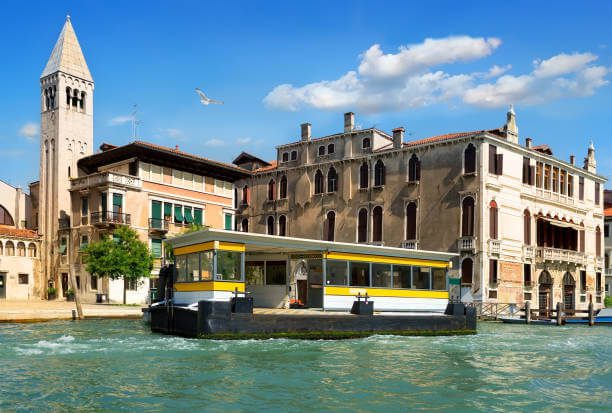
The vaporetto is operated by ACTV (Azienda del Consorzio Trasporti Veneziano), Venice’s official public transport authority. It is the main way to travel longer distances in the city.
Always validate your ticket before boarding. Inspectors check regularly. Fines are issued on the spot for unvalidated tickets.
VAPORETTO TICKET PRICES
| Ticket Type | Price | Best For |
|---|---|---|
| Single trip (75 min) | €9.50 | Occasional use only |
| 24-hour pass | €25 | One full day of travel |
| 48-hour pass | €35 | Two-day stays |
| 72-hour pass | €45 | Three-day stays |
| 7-day pass | €65 | Week-long stays — includes island routes |
- The Line 1 vaporetto travels the full Grand Canal from Santa Lucia station to Piazza San Marco. Journey time: approximately 1 hour. This is the most scenic route and the most recommended first experience in this Venice travel guide.Walking is always the primary method for exploring Venice. Google Maps works well. Download an offline map before arriving. Street addresses in Venice use the sestiere name plus a number (e.g., San Polo 4265), not a standard street name and number format.
Venice Travel Guide: Budget Tips and Daily Costs
Venice is one of the most expensive cities in Italy. Prices for accommodation, food, and activities are higher than in Rome, Florence, or Milan. This section of the Venice travel guide gives you clear budget targets.
| FOOD | COSTS | |
| Cicchetti at a bacaro | €5–€12 per person | |
Venice Budget Tips 8 Ways to Save Money in Venice
1. Buy a vaporetto multi-day pass. The 24-hour pass (€25) saves money from the third trip onward compared to single tickets (€9.50 each). The 7-day pass (€65) covers all island routes.
2. Use the combined Piazza San Marco museum pass (€25). It covers Doge’s Palace, the National Archaeological Museum, the Correr Civic Museum, and the Marciana National Library.
3. Eat cicchetti at Bacari in Cannaregio or Dorsoduro. A full meal with wine costs €10–€15 per person. Far more affordable and authentic than tourist restaurants.
4. Never eat at Piazza San Marco. Prices are 2–3x higher with no quality improvement.
5. Shop at the Rialto Market in the morning. Fresh produce and ingredients for self-catering cost €50–€60 per week.
6. Arrive at major sights before 9 a.m. Early entry rates apply at the Accademia (€10 vs €15). Queues are significantly shorter.
7. Tap water is safe to drink in Venice, confirmed by ACEA (Italian Water Authority). Carry a reusable bottle and eliminate €1.50 bottled water costs.
8. Use the Venezia Unica City Pass for bundled museum, transport, and attraction discounts. Calculate savings based on your planned itinerary before purchasing.
Venice Travel Guide: Best Time to Visit Venice
Venice receives visitors year-round. The experience differs greatly by season. According to the Venice Tourism Authority, peak daily visitor numbers occur between June and August.
Spring (March–May): 17–22°C, moderate crowds, good hotel prices, Vogalonga rowing race (May), Festa della Sensa (May), recommended season.
Summer (June–August): 18–28°C, maximum crowds, highest prices, Venice Film Festival (late August), avoid if possible.
Autumn (September–November): 12–22°C, best overall season, fewer tourists, lower prices, acqua alta begins in November, ideal months are September–October.
Winter (December–February): 3–10°C, very quiet, lowest prices, Carnival in February brings large crowds, pack waterproof boots for November–December.
Acqua Alta Venice Flooding Explained
Acqua alta (“high water”) is a natural tidal phenomenon causing seasonal flooding. It occurs most frequently between October and March. November and December carry the highest risk. Piazza San Marco floods first due to its low elevation.
The city places elevated wooden walkways (passarelle) in flood-prone areas during events. Warning sirens sound several hours in advance. The first siren indicates 100cm water level. Every subsequent siren adds 10cm. At 100cm, approximately 5% of the city is affected. At 140cm, approximately 90% is affected. Pack waterproof boots or shoe covers if visiting between October and February.
Venice Travel Guide: Dos and Don’ts in Venice, Italy
Do and Don’ts in Venice, Italy Complete Venice Travel Guide Rules
DO arrive at Piazza San Marco before 9 a.m. It is nearly empty at that hour. The experience is dramatically better than midday visits.DO validate your vaporetto ticket before boarding. Fines are issued on the spot.
DO learn basic Italian greetings. “Ciao,” “grazie,” and “per favore” are appreciated by local residents.
DO greet and say goodbye to staff in shops and restaurants. Say “ciao” entering and “arrivederci” leaving. This is standard Italian social etiquette.
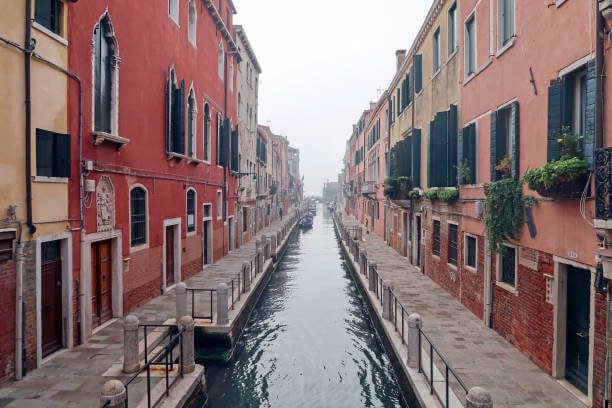
DO wander the back streets of Cannaregio, Dorsoduro, and San Polo. Most tourists never leave the main tourist corridor. Walking one block off it reveals a completely different Venice.
DON’T eat at any restaurant on Piazza San Marco. Prices are inflated two to three times above the local average.
DON’T touch the canal water. Venice’s canals are connected directly to the Adriatic Sea. They are not treated freshwater. Contact should be avoided for health reasons.
DON’T buy uncertified glass on Murano. Much of what is sold is imported and not authentic Murano glass. Check for the official Italian certification mark before buying.
DON’T accept free boat rides to Murano from hotels or tourist agencies. These involve pressure selling of low-quality, non-authentic glass. Take the vaporetto independently.
DON’T visit Venice only for a cruise ship day trip. Day visitors have a few hours, cluster in Piazza San Marco, and miss everything that makes Venice worth visiting.
What Is Considered Impolite in Italy?
Being very loud in public is considered rude known as “brutta figura.” Ordering a cappuccino after a meal is seen as unusual by locals, who drink espresso after eating. Sitting on the steps of churches or monuments carries a fine in Venice. Cutting queues is considered disrespectful across Italy.
Is It Okay to Wear Jeans in Venice?
Yes. Jeans and casual clothing are acceptable throughout Venice. When entering churches or religious sites, shoulders and knees must be covered. Carry a light scarf or layer to comply with entry requirements at basilicas and chapels.
Are There Any Parts of Venice to Avoid?
Venice has no genuinely unsafe areas. However, for practical reasons: Avoid Piazza San Marco at midday in summer overcrowded and overpriced. Avoid the train station–Rialto Bridge corridor during peak hours, the most congested tourist route. Avoid staying overnight in San Marco if on a budget the highest accommodation costs in the city. The best areas to spend time are Cannaregio, Dorsoduro, and San Polo.
Venice Travel Guide: Venice Itinerary Guide
How Many Days Do You Really Need in Venice?
3 days is the recommended minimum for a first visit. This allows time for the main sights, one or two neighborhoods, and a day trip to Burano or Murano.
3-Day Venice Itinerary Guide:
Day 1 San Marco: St. Mark’s Basilica before 9 a.m. → Doge’s Palace → Rialto Bridge and Rialto Market (morning) → afternoon walk through San Polo back streets
Day 2 Cannaregio and Dorsoduro: Morning walk through Cannaregio including the Jewish Ghetto and Fondamenta della Misericordia → Afternoon in Dorsoduro: Accademia or Guggenheim → cicchetti and Spritz on Rio di San Trovaso
Day 3 Islands: Burano in the morning (leave by 9 a.m. from Fondamenta Nove) → Murano on the return journey to Venice
A fourth day adds time for a gondola ride, a classical concert, additional neighborhoods, and Castello.
How Many Days Do You Really Need in Venice?
3 days is the recommended minimum for a first visit. This allows time for the main sights, one or two neighborhoods, and a day trip to Burano or Murano.
How to Spend 2 Full Days in Venice
Day 1 morning: St. Mark’s Basilica before 9 a.m. → Campanile → Doge’s Palace → Rialto Bridge and Market
Day 1 afternoon: Walk through Cannaregio → cicchetti and Spritz at Fondamenta della Misericordia
Day 2 morning: Burano island (leave by 9 a.m. from Fondamenta Nove)
Day 2 afternoon: Dorsoduro walk → Accademia or Guggenheim → sunset from Ponte dell’Accademia For a more detailed 2-day plan, read our 2 days in Florence itinerary for a comparable approach to Florence.
How Long Does It Take to Walk All of Venice?
Walking from the Santa Lucia train station to the eastern edge of Castello takes approximately 45 to 60 minutes at a moderate pace. With canal detours, bridges, and dead ends, allow 2 to 3 hours for a relaxed city-wide walk. Venice’s winding streets make navigation challenging even with a map getting briefly lost is a normal part of the experience.
Venice Travel Guide: Safety Tips
Venice is considered a very safe destination for tourists. The primary risk is petty theft and pickpocketing. This is most common in Piazza San Marco, on the vaporetto, and near the Rialto Bridge. Keep bags secured and avoid displaying valuables. Never leave personal items unattended. Make copies of your passport and travel documents before arriving. Emergency numbers: 113 (Police) | 118 (Medical emergency) | 115 (Fire)
Solo female travellers should feel safe throughout Venice. Standard precautions apply: do not leave drinks unattended in bars and do not walk home alone late at night while intoxicated.
If acqua alta flooding occurs during your visit, follow the elevated walkways (passarelle) placed by the city and check the official Venice Tide Forecast service (Centro Previsioni e Segnalazioni Maree, Venice municipality) for real-time updates.
This Venice travel guide has covered everything you need to plan a first trip with confidence. The most important points are simple. Visit in September or October. Stay in Dorsoduro or Cannaregio. Arrive at major sights before 9 a.m. Eat cicchetti at bacari rather than tourist restaurants. Use the vaporetto multi-day pass. Walk into the back streets of every neighborhood.
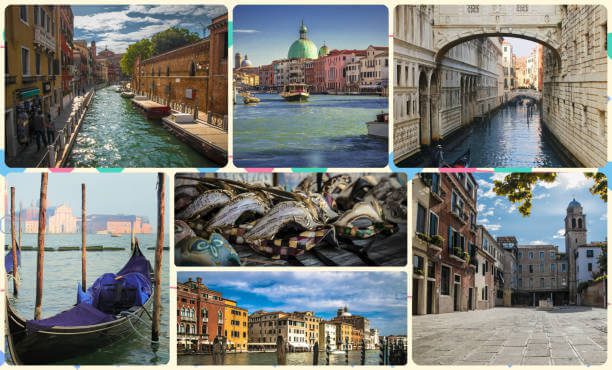
Venice has real overcrowding challenges. But those challenges are almost entirely concentrated in the narrow corridor between the train station, Rialto Bridge, and Piazza San Marco. Walk one block off that path in any direction and the city changes completely. The quiet canals of Cannaregio, the university squares of Dorsoduro, and the residential streets of Castello are accessible to any visitor who moves beyond the main tourist route.
This Venice travel guide recommends 3 days minimum, staying in Dorsoduro or Cannaregio, and visiting in September or October. Budget from €80 per day. Arrive early at major sights, eat cicchetti at bacari, and explore beyond San Marco.
How many days do you really need in Venice?
Three days is the recommended minimum for first-time visitors. This gives you time to visit St. Mark’s Basilica, the Doge’s Palace, and the Rialto Bridge; explore Cannaregio and Dorsoduro; and take a day trip to Burano or Murano. A fourth day allows for more neighborhoods, museums, and a gondola ride.
What should you not miss in Venice?
Do not miss St. Mark’s Basilica, the Doge’s Palace, the Rialto Bridge and Market, and a walk through Cannaregio. A visit to Burano Island is also strongly recommended. Less obvious but equally important: evening cicchetti and Spritz at Fondamenta della Misericordia, and wandering the back streets of Dorsoduro away from tourist crowds.
What is a must eat in Venice?
The most important Venetian foods to eat are cicchetti (small plates at bacari wine bars), sarde in saor (sweet-sour sardines), seppie al nero (cuttlefish in squid ink with polenta), tramezzini (triangular sandwiches), and Spritz Veneziano. These dishes are specific to Venice and the Veneto region and cannot be replicated in the same way elsewhere in Italy.
How much is a 30-minute gondola ride in Venice?
A 30-minute daytime gondola ride in Venice costs €90 per boat. This price is set and regulated by the City of Venice and is non-negotiable under municipal law. The price is per boat (up to 5 passengers), not per person. An evening gondola ride (after approximately 7 p.m.) costs €110 for 35 minutes.
Is tipping customary in Venice?
Tipping is not required in Venice or anywhere in Italy. Most restaurants include a service charge (servizio) in the bill. Some also include a cover charge (coperto). Italians do not typically tip. If you received exceptional service, leaving small change is appreciated but is not expected.
What is the best month to visit Venice?
September and October are the best months to visit Venice. The summer crowds have reduced, prices are lower than peak season, and the weather remains pleasant with temperatures between 15°C and 22°C. Autumn is consistently identified as the best season by travel experts and the Venice Tourism Authority.
Where to avoid staying in Venice?
Avoid staying in San Marco if you are on a budget. It is the most expensive district with the highest accommodation prices. The area is also the most crowded during the day. Dorsoduro and Cannaregio offer better value, quieter streets, and a more local atmosphere.
What sweets is Venice known for?
Venice is known for baicoli (thin butter biscuits traditionally dipped in wine), fritelle veneziane (fried dough balls most popular during Carnival), bussolai buranelli (butter biscuits from Burano island), and tiramisu, which has historical roots in the nearby Veneto city of Treviso. Artisan gelato is also widely available throughout the city.
What drink is Venice known for?
Venice is known for the Spritz Veneziano a drink made with prosecco, sparkling water, and a bitter liqueur. Select liqueur is the local choice. Prosecco is the regional sparkling wine of the Veneto, where Venice is located. Wine by the litre is sold at traditional bacari wine shops throughout Cannaregio and Dorsoduro.
What seafood is Venice known for?
Venice is known for sarde in saor (sardines in sweet-sour marinade), seppie al nero (cuttlefish in squid ink), branzino (sea bass), vongole (clams), and fritto misto (mixed fried seafood). The Venetian Lagoon and the northern Adriatic Sea provide a wide range of fresh seafood to the city’s restaurants and markets year-round.
Why shouldn’t you touch the water in Venice?
Venice’s canals are not treated with freshwater. The canal system is connected directly to the Adriatic Sea and carries tidal saltwater. The canals also receive water from the surrounding lagoon ecosystem. Contact should be avoided for hygiene and health reasons.