Italy Weather in October: The Complete City-by-City Weather Guide

The honest answer is: better than most people expect. The oppressive summer heat is gone. The peak-season crowds at the Colosseum, the Uffizi, and the Amalfi Coast have thinned significantly. Hotel prices and airfares fall into shoulder-season ranges. And the harvest season turns every market and restaurant into a celebration. Truffles, chestnuts, new wine, and porcini mushrooms appear on every menu.
But Italy does not have one October climate. It has six or seven, stacked from north to south. Milan sits at 9–18°C with morning fog in late October. Sicily stays warm at 24–25°C, still warm enough to swim in early October. Rome and Florence sit comfortably in between at 11–22°C.
This guide is the weather chapter of our complete Italy in October guide . That parent guide covers everything from festivals and food to budget and packing. This page focuses specifically on temperatures, rainfall, sunshine hours, and city-by-city weather data so you can choose the right region and pack the right bag.
Is October a nice month to visit Italy? Yes, one of the best. Do you need a coat? That depends entirely on which city you are visiting. Is $5,000 enough? Yes, comfortably at mid-range. All of those answers are in this guide.

Table of Contents
Understanding Italy’s October Climate
Italy’s geographical shape directly controls its weather. The country stretches over 1,200 kilometres from north to south, creating dramatic climate differences between regions, according to the Italian Air Force Meteorological Service (ITAF Meteorologia) .
The Alps in the north act as a barrier. They block cold polar air from Central Europe, keeping most of Italy warmer than other countries at similar latitudes.
The Apennine mountain range runs down the spine of the peninsula. It divides the western and eastern coasts. The western side where Rome and Florence sit receives more rainfall. The eastern Adriatic coast receives less.
Coastal areas benefit from sea breezes that moderate temperature extremes. Inland cities like Milan can feel significantly colder in the early morning than coastal cities at the same latitude.
In October, all of these factors produce a weather pattern that is generally mild, occasionally showery, and highly variable from north to south.
Average Temperature in Italy in October
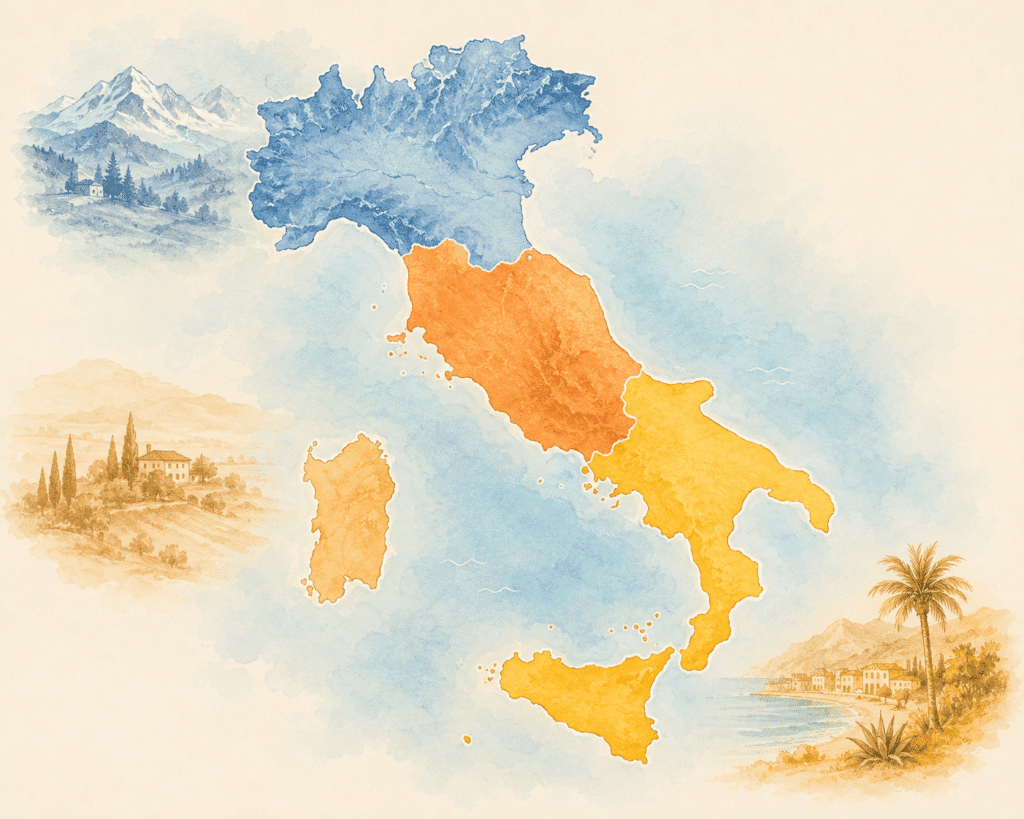
The average temperature in Italy in October ranges from **7°C in the north to 25°C in the south**. The variation between regions is one of the largest of any European country in October, according to historical climate records published by the European Centre for Medium-Range Weather Forecasts (ECMWF).
Here is the full regional and city-by-city temperature breakdown:
| City | Monthly Rainfall | Rainy Days | Daily Sunshine | Humidity |
|---|---|---|---|---|
| Milan | 70–80mm | 9–11 days | 4–5 hrs | 72–78% |
| Venice | 60–75mm | 8–10 days | 4–5 hrs | 75–80% |
| Florence | 80–90mm | 9–11 days | 5–6 hrs | 70–75% |
| Rome | 38–50mm | 7–8 days | 5–6 hrs | 68–74% |
| Naples | 90–100mm | 8–10 days | 6 hrs | 68–72% |
| Sicily — Palermo | 40–60mm | 5–7 days | 6–7 hrs | 65–70% |
Is October a Nice Month to Visit Italy?
Yes October is one of the nicest months to visit Italy. Here is why experienced travellers consistently prefer it over summer.
Italy’s weather in October is mild and comfortable across most of the country. You are not fighting 35°C heat in Rome. You are not waiting two hours in direct sun to enter the Colosseum. Museums and attractions have shorter queues at the Vatican, the Uffizi, and the Accademia. Flights and hotels cost significantly less than July and August.
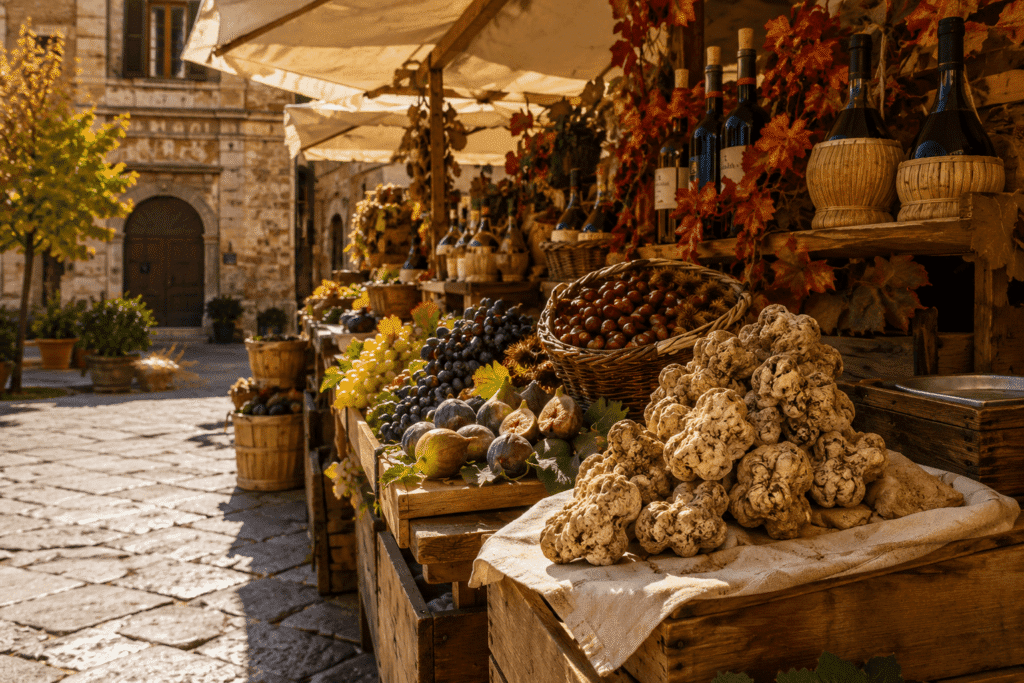
And then there is the harvest. October is when Italy’s food culture peaks. White truffle festivals run throughout Alba in Piedmont. The EuroChocolate festival takes over Perugia. Local small-town harvest celebrations take place every weekend across Tuscany, Umbria, and Campania. Seasonal restaurant menus appear that only exist in autumn.
What is the cheapest month to go to Italy? January and February overall but October is the cheapest month with genuinely good weather.
Is $1,000 enough for a week in Italy? For budget travellers in hostels eating at local markets barely. Plan for $1,500 minimum for a comfortable week. Is $10,000 enough? More than enough for a luxurious two-week trip across multiple regions.
For planning your Rome days this October, our 2-day Rome itinerary is the most efficient way to cover the key landmarks. For what to eat in Rome this season, our food in Rome Italy guide covers every autumn dish worth ordering.
Rome Weather in October
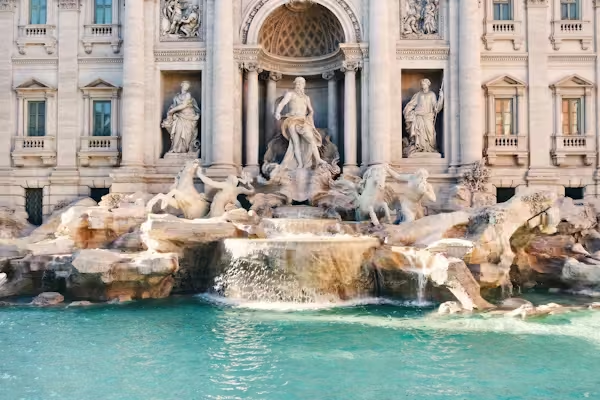
Rome’s weather in October is widely regarded as some of the best in Europe for city travel. The Italian capital sits in central Italy at 41°N latitude, giving it a warm Mediterranean climate that lingers well into autumn.
Daytime temperatures in Rome in October average 22–23°C (72–73°F). This is warm enough to wear a t-shirt at midday and comfortable enough to walk for hours without overheating. Evenings cool to around 11–13°C (52–55°F), so a light jacket becomes necessary after sunset.
Rome receives approximately 38mm of rain over 7–8 days in October, according to climate records from the Italian Meteorological Society. This is considerably less than Florence or Milan in the same month. Most rain falls as short afternoon showers. Sunny mornings are the norm throughout October.
Sunshine averages 5–6 hours per day. Daylight starts at around 7am at the beginning of October and the sun sets just before 7pm. By the end of October, daylight saving ends and sunset moves to around 5pm giving you shorter afternoons for outdoor sightseeing.
The UV index in Rome in October is moderate sun protection and is still recommended for long days outdoors.
Rome October vs September: Weather Comparison
| Metric | September — Rome | October — Rome |
|---|---|---|
| Average High | 27–28°C / 81–82°F | 22–23°C / 72–73°F |
| Average Low | 16–17°C / 61–63°F | 11–13°C / 52–55°F |
| Rainfall | ~63mm | ~38mm |
| Daily Sunshine | 7–8 hrs | 5–6 hrs |
| Crowd Level | High peak shoulder | Moderate noticeably quieter |
Sicily italy Weather in October
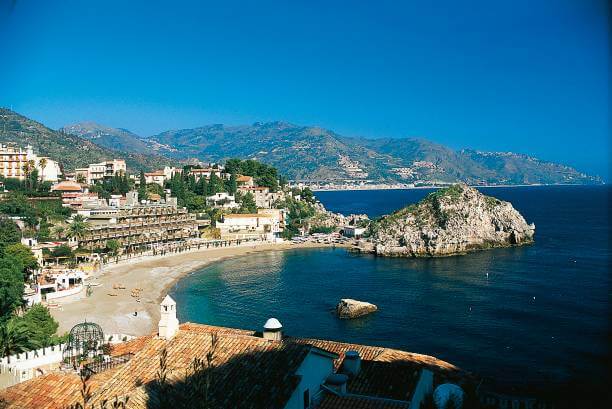
Sicily’s weather in October is the warmest in Italy. The island sits at the southern tip of the country, surrounded by the Mediterranean Sea on three sides. This gives Sicily a semi-arid Mediterranean climate with hot summers and mild winters.
In October, Sicily averages daytime highs of 24–25°C (75–77°F) , still warm enough to sit outside all day without a jacket. Evenings are mild at 15–16°C (59–61°F), considerably warmer than northern Italy at the same time of year.
The sea temperature around Sicily in October averages 22–23°C (72–73°F) , according to data from the Italian National Institute for Environmental Protection and Research (ISPRA). This makes early October comfortable for swimming in a way that is not possible anywhere else in Italy.
Rainfall in Sicily in October is low approximately 40–60mm over 5–7 days. Sunny days are the norm. Southern Sicily, including the areas around Agrigento and the Valley of the Temples, can be even drier than Palermo.
Sicily in October gives you:
- Temperatures 6–8°C warmer than Rome
- Sea swimming still possible in early October
- Access to ancient Greek ruins and baroque towns without summer heat
- Wine harvest season in the Etna and Marsala regions
- Local food festivals celebrating almonds, olives, and new wine
If you are combining Sicily with northern Italy, our things to do in Cinque Terre guide makes a perfect contrast rugged northern coast versus warm southern island, both at their best in October.
Milan Weather in October
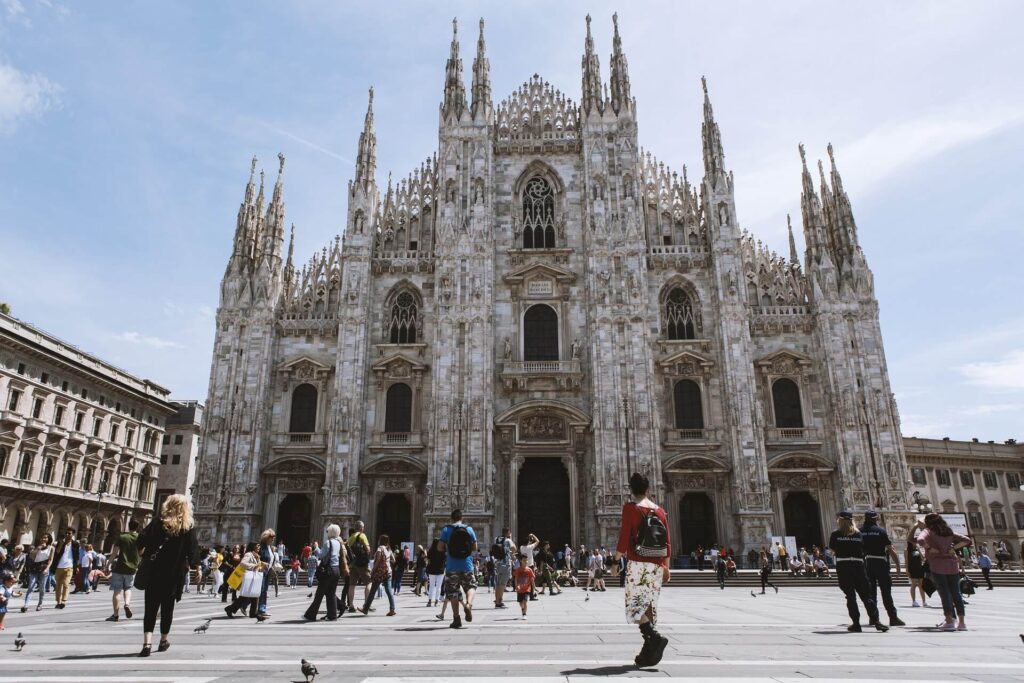
Milan’s weather in October is the coolest of Italy’s major cities. Milan sits in the Po Valley in northern Italy, enclosed by the Alps to the north and the Apennines to the south. This geography creates a continental climate with cold winters and hot summers. October brings the city firmly into autumn.
Daytime temperatures in Milan in October average 9–18°C (48–64°F). Mornings can feel cold particularly in the second half of October when early morning lows approach 7–8°C. Afternoons warm up to a comfortable 16–18°C on sunny days.
Milan receives 70,80mm of rainfall over 9–11 days in October, more than Rome and significantly more than Sicily. The Po Valley is also prone to morning fog in October and November, a local weather feature known as nebbia. Fog typically lifts by mid-morning and does not affect daytime sightseeing.
Sunshine averages 4–5 hours per day in Milan in October, the lowest of any major Italian city. This makes Milan best visited earlier in October rather than late in the month when fog and cloud cover increase.
If you are visiting Venice as part of a northern Italy trip, our best time to visit Venice Italy guide explains exactly why October stands out from every other month for canal-city travel.
Florence Weather in October
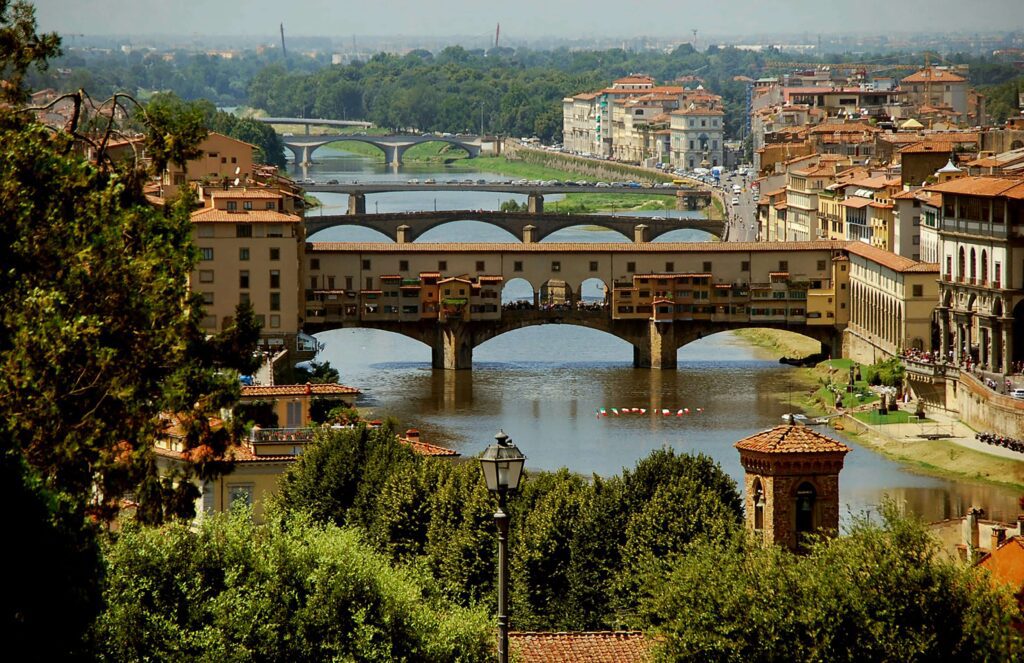
Florence weather in October is mild, frequently sunny, and arguably the most beautiful of any Italian city in this month. Florence sits in the Arno Valley in Tuscany, surrounded by hills that protect it from the coldest northern winds while still allowing autumn to arrive naturally.
Daytime temperatures in Florence in October average 10–21°C (50–70°F). Afternoons are warm and pleasant. Mornings and evenings drop noticeably typically to 10–12°C by late October.
Florence is the rainiest major city in central Italy in October. It receives approximately 80–90mm of rainfall over 9–11 days per month, according to Italian meteorological service data. The surrounding Apennine hills channel moisture from the Tyrrhenian Sea inland, increasing Florence’s rainfall relative to Rome.
Despite the rainfall, 5–6 hours of daily sunshine remain available. Rainy days in Florence are usually partial; a morning shower followed by afternoon sun is the most common pattern.
Follow our 2 days in Florence itinerary for a well-paced October visit. For autumn dining, our best restaurants in Florence include seasonal menus that peak in October truffle pasta, ribollita, and Chianti Classico Riserva.
Is it Okay to Wear Sneakers in Italy?
Yes and it is the recommended choice. Comfortable, clean sneakers handle Italy’s cobblestone streets, museum floors, and day-trip trails better than any other footwear. Neutral-coloured sneakers are accepted in restaurants and cafes throughout Italy.
Avoid high heels on cobblestones. They are impractical, uncomfortable, and can cause falls on wet or uneven stone surfaces.
The 3-3-3 packing rule adapted for Italy in October: 3–4 long-sleeve tops, 2 bottoms (dark jeans plus one smart pair), and 2 shoe pairs (sneakers plus ankle boots). This fits in a carry-on and covers every weather and dress scenario you will encounter.
For accommodation in Florence, our where to stay in Florence guide covers every neighbourhood and price range. For Venice, our where to stay in Venice covers the islands, mainland options, and what to expect in October specifically.
Full Clothing Checklist
- Long-sleeve tops (3 ,4 pieces)
- Light sweater or cardigan
- Mid-weight jacket (proper coat for Milan or Venice evenings)
- Jeans or chinos
- One smart casual outfit for evening dinners
- Light scarf doubles as church shoulder cover
- Long-sleeve pajamas for cool nights
- Underwear and socks (5–7 pairs)
- Sunglasses
- Comfortable closed-toe walking sneakers
- Ankle boots versatile for day and evening use
- Compact travel umbrella
- Packable waterproof rain jacket
- Small daypack or crossbody bag.

Is $5,000 Enough for a Trip to Italy in October?
Yes $5,000 is a comfortable budget for a 10–14 day October trip to Italy for one person. October’s shoulder-season pricing makes this significantly more achievable than the same trip in July or August.
Here is a realistic daily cost breakdown:
| Category | Budget | Mid-Range | Comfortable |
|---|---|---|---|
| Hotel (per night) | €50–80 | €100–180 | €200–350+ |
| Food (per day) | €25–35 | €50–80 | €100–150+ |
| Transport (per day) | €10–15 | €20–40 | €50–100 |
| Attractions (per day) | €10–20 | €25–50 | €60–120 |
| Daily Total (est.) | €95–150 | €195–350 | €410–720+ |
Is $1,000 enough for a week in Italy? For budget travellers in hostels eating at local markets and skipping paid attractions barely. Plan for $1,500 minimum for a comfortable week. Is $10,000 enough? More than enough for a luxurious two-week trip.
According to cost-of-living data from Numbeo, Italy’s daily costs are broadly comparable to France and Spain, with food consistently rated excellent value relative to quality.
Is it better to bring cash or card to Italy? Bring both. Cards are accepted in hotels and larger restaurants in major cities. Smaller towns, local markets, and family-run trattorias strongly prefer cash. Carry a no-foreign-fee card for large purchases and €50–100 cash for daily spending. ATMs called Bancomat are available throughout Italy.
For trains between cities, the official Trenitalia website is the most reliable booking source. Book at least a week ahead for the best fares on high-speed routes.
Planning a romantic October trip? Our Valentine’s Day in Rome guide is packed with romantic spots, evening walks, and restaurant recommendations that work equally well for any special October trip to Rome.
What Can I Not Bring into Italy?
This question matters especially for travellers arriving from outside the EU. Italy follows EU customs regulations, enforced by the Italian Customs Agency (Agenzia delle Dogane e dei Monopoli).
Food Restrictions Entering Italy
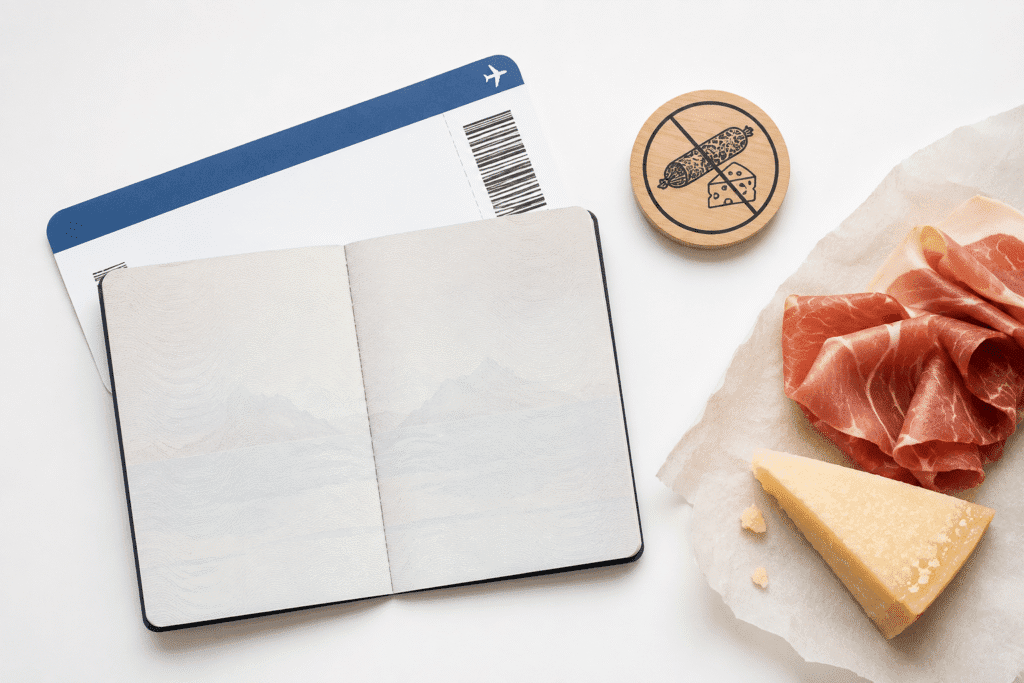
- You cannot bring the following from outside the EU:
- Meat and meat products including cured meats, jerky, and sausages
- Dairy products above personal limits from non-EU countries
- Fresh fruit and vegetables from non-EU countries
- Honey and bee products in commercial quantities
- Violations can result in confiscation and fines at border points.
Medications and Supplements
Prescription medications are permitted for personal use. Carry a copy of your prescription and a signed doctor’s note especially for controlled substances. Some medications that are sold over the counter in the US require a prescription in Italy.
Can I bring gummies to Italy? Yes. Standard vitamin or supplement gummies are permitted in personal quantities under EU customs rules. CBD products remain in a legal grey area in Italy to avoid bringing them to eliminate any risk.
Cash and Currency
You can carry any amount of cash into Italy. However, any amount over €10,000 or its equivalent in any other currency must be declared at customs upon entry, under EU Regulation. Failure to declare is a criminal offence.
What Not to Pack for Italy in General
- High heels impractical and uncomfortable on cobblestone streets
- Excessive formal wear Italy is stylish but most restaurants are not black-tie
- Full-size toiletries available at pharmacies and supermarkets everywhere
- Expensive jewellery leave it at home to reduce pickpocket risk
- Multiple paper guidebooks heavy, outdated quickly, better replaced by your phone
Italy Weather in October: Quick Regional Reference
| Region | Temp Range | Rainfall | Sunshine | Best For |
|---|---|---|---|---|
| Northern Italy | 7–18°C / 45–65°F | High | 4–5 hrs/day | Culture, fashion, opera |
| Central Italy | 11–22°C / 52–72°F | Moderate | 5–6 hrs/day | Sightseeing, food, art |
| Southern Italy | 15–25°C / 59–77°F | Low | 6–7 hrs/day | Beach, ruins, warmth |
| Sicily | 15–25°C / 59–77°F | Low | 6–7 hrs/day | Warmth, history, food |
Final Thoughts: Italy Weather in October
Italy weather in October rewards travellers who plan for it properly.
The country does not have one October climate; it has six or seven, stacked from north to south. Choose Sicily or Puglia for warmth, sea, and long sunny days. Choose Rome or Florence for the best balance of mild weather, cultural access, and shoulder-season prices. Choose Milan or Venice for autumn atmosphere, opera season, and city culture without summer crowds.
Whatever region you choose, October weather in Italy gives you something summer cannot: comfortable temperatures for walking all day, golden light on ancient stone, harvest food that fills every market and menu, and an authentic version of Italy that belongs to travellers rather than crowds.
Pack layers. Carry an umbrella. Know customs rules before you leave. Book festival destinations early. Planning your full October Italy trip? These guides cover everything you need:
Is October a nice month to visit Italy?
Yes one of the nicest. Italy weather in October is mild at 10–25°C depending on region, crowds are well below summer levels, prices drop to shoulder-season rates, and the harvest festival calendar peaks. The trade-offs are moderate rain and shorter daylight — both easily managed with a jacket and earlier start times.
Do I need a coat in Italy in October?
It depends on your destination. In Milan and Venice yes, a proper mid-weight coat is needed for evenings and cool mornings. In Rome and Florence, a light jacket or cardigan is usually enough. In Sicily and southern Italy, a light layer handles most October evenings comfortably.
Is it okay to wear sneakers in Italy?
Yes. Comfortable sneakers are the most practical choice for Italy weather in October. They handle cobblestone streets, museum floors, and day trips well. Clean neutral sneakers are accepted in restaurants and cafes. Avoid heels on cobblestones they are impractical and uncomfortable on wet or uneven stone.
Is Italy cheap in October?
Cheaper than July and August, yes. October is shoulder season flights, hotels, and tours all cost less. A comfortable mid-range 10-day trip costs approximately $4,500–6,000 per person including flights from the US. Festival cities like Alba and Lucca see local price spikes book those destinations early.
Is $5,000 enough for a trip to Italy?
Yes. For one person, $5,000 covers a well-planned 10–14 day October trip mid-range hotels ($150–250/night), food ($40–70/day), attraction entries ($15–35 each), and US return flights ($200–500). October’s shoulder-season pricing makes this more achievable than the same trip in summer.
What clothes to pack for italy in October?
Pack light layers — long-sleeve tops, a cardigan, and a mid-weight jacket. Bring a compact umbrella and packable rain jacket. Comfortable closed-toe walking shoes are essential for cobblestones. A light scarf handles warmth and church dress requirements. For Milan or Venice, pack a proper coat for evenings.
What can I not bring into Italy?
From outside the EU: no meat products, no dairy in commercial quantities, no fresh fruit or vegetables from non-EU countries. Prescription medications need a copy of your prescription. Cash over €10,000 must be declared at customs. Gummies and standard supplements in personal quantities are permitted.