Florence Landmarks: 25+ Must-See Historic Sites, Museums & Hidden Gems

Florence is home to more than 25 world-class landmarks spanning Gothic cathedrals, Renaissance museums, medieval bridges, and ancient piazzas. The most famous Florence landmarks include the Florence Cathedral (Duomo), Uffizi Gallery, Michelangelo’s David at the Accademia Gallery, Ponte Vecchio, and Piazza della Signoria.
This complete guide covers every major historic site with opening hours, ticket prices, and insider tips so you can plan your visit efficiently and without missing anything important. For travelers who want to go beyond the famous sights, our guide to unusual things to do in Florence covers 25 local experiences most tourists never find.
To plan your days around these landmarks, see our 2 days in Florence itinerary which covers the most logical route through the city.
Table of Contents
Most Famous Florence Landmarks
The most visited Florence landmarks cluster around the historic center.
Florence Cathedral The Duomo
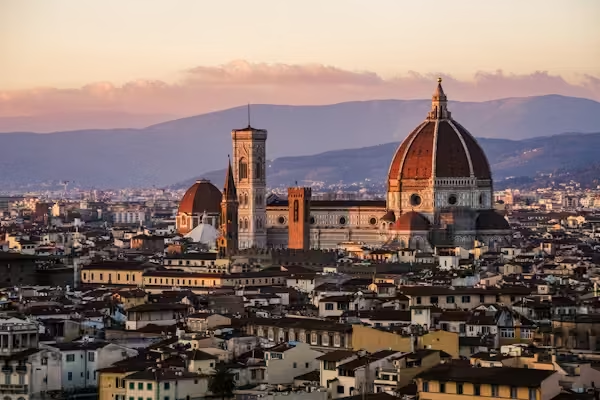
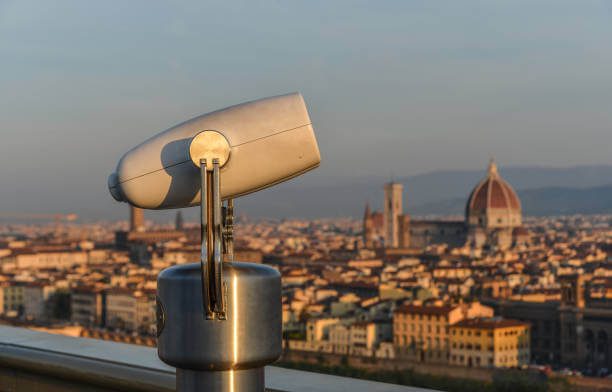
Construction began in 1296 and finished in 1436, showcasing Italian Gothic architecture at its most ambitious. The exterior is decorated with pink, green, and white marble. The dome, designed by Filippo Brunelleschi, is an engineering marvel and the largest masonry dome in the world built without scaffolding, a revolutionary technique for its time.
Inside, visitors find frescoes by Giorgio Vasari and Federico Zuccari on the dome’s interior depicting the Last Judgment. The cathedral is part of a UNESCO World Heritage Site.
- Opening hours: Monday–Saturday 10 AM–5 PM, Sunday 1:30 PM 4:45 PM
- Dome climb: €30 combined ticket 463 steps book in advance
- Best time: Early morning before 9 AM for fewest crowds
- Pro tip: Visit Giotto’s Campanile for a different panoramic angle
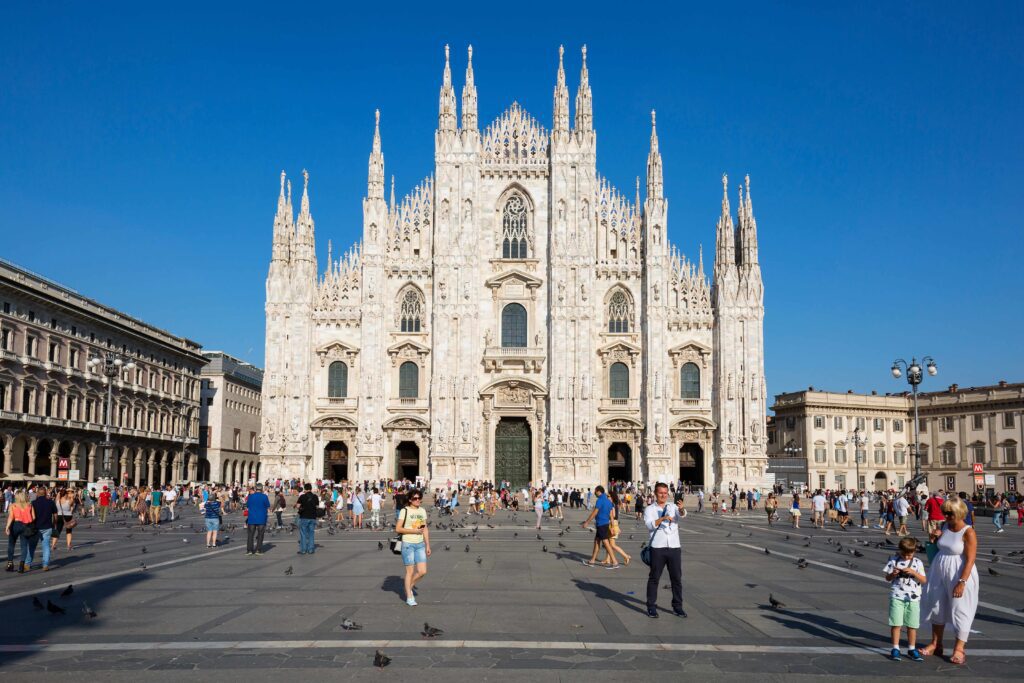
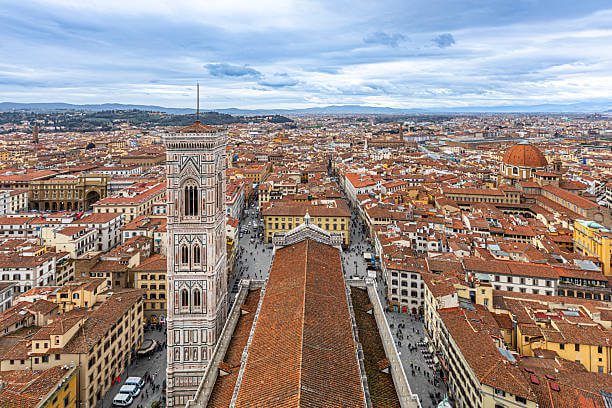
Giotto’s Campanile Iconic Bell Tower
An 82-meter Gothic bell tower standing beside the Duomo, designed by Giotto di Bondone in the 14th century. The exterior features geometric marble inlays of white (Carrara), green (Prato), and pink (Siena) , one of the finest examples of polychrome Gothic architecture in Italy.
- Best time: Late afternoon for golden light photography
- Climb: 414 steps to the summit panoramic views of Florence and Tuscan hills
- Combined ticket: Included with Duomo complex pass
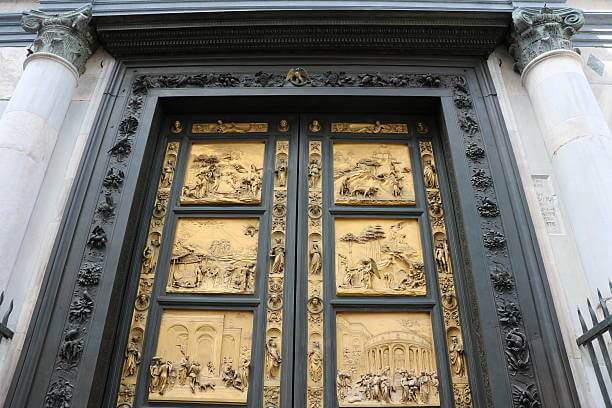
Baptistery of St. John
One of Florence’s oldest monuments, the Baptistery stands directly opposite the Duomo and is famous for its three sets of bronze doors most notably the Gates of Paradise by Lorenzo Ghiberti. The interior dome features golden mosaics depicting the Last Judgment. The poet Dante Alighieri was baptized here.
- Combined ticket: Included with Duomo complex pass
- Tip: Arrive early morning light on the bronze doors is spectacular
- Do not miss: Look up at the ceiling mosaics immediately upon entry
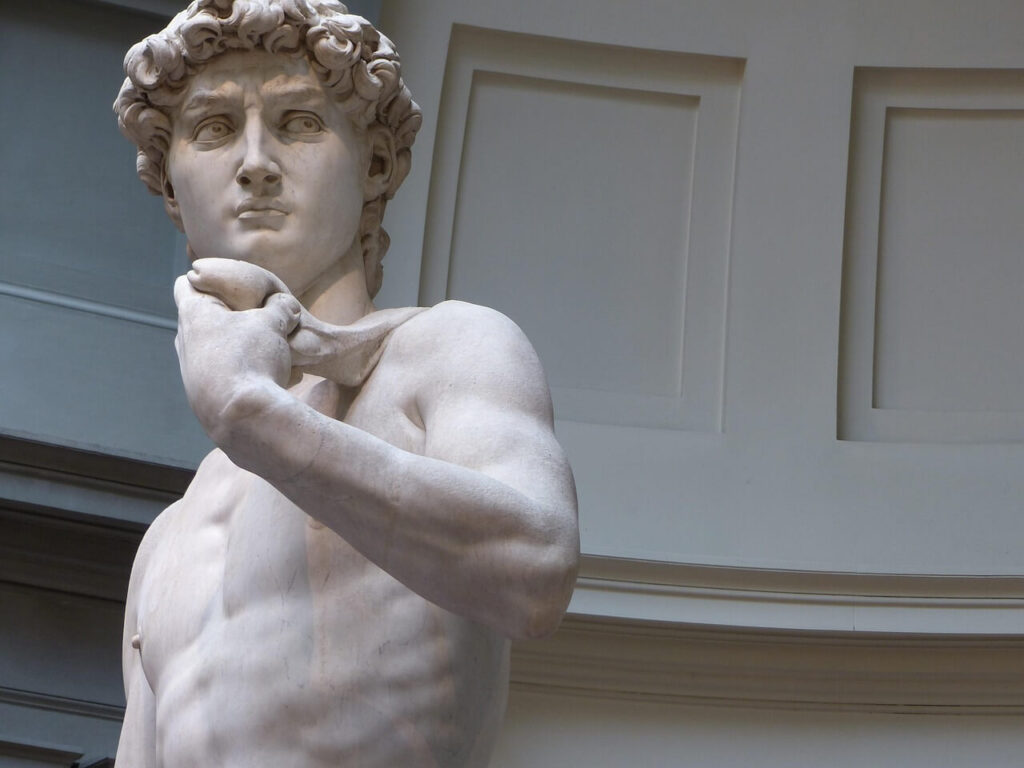
Accademia Gallery Michelangelo’s David
The Accademia Gallery houses Michelangelo’s David a 5.17-meter marble statue considered one of the greatest achievements in Renaissance sculpture. Beyond David, the gallery contains his unfinished Prisoners series, which reveal his working method, plus Renaissance paintings by Botticelli, Ghirlandaio, and Pontormo.
- Cost: €20 book online to skip the queue
- Opening hours: Tuesday–Sunday 8:15 AM–6:50 PM (closed Mondays)
- Pro tip: Book tickets at least 3 days ahead same-day entry rarely available in peak season
Uffizi Gallery
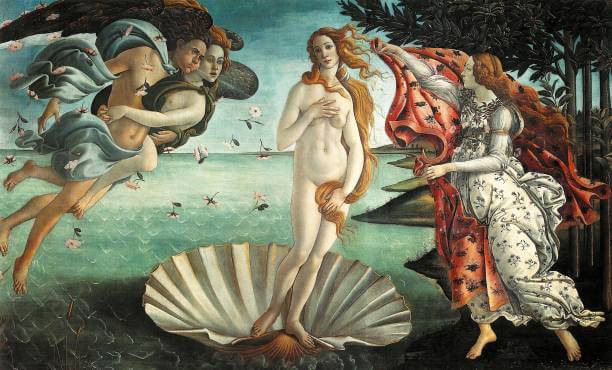
The Uffizi Gallery holds one of the world’s greatest collections of Renaissance art Botticelli’s Birth of Venus and Primavera, works by Leonardo da Vinci, Raphael, Caravaggio, and Michelangelo. Its riverfront location also provides panoramic views of the Arno River and Ponte Vecchio.
- Cost: €20–25 book online for skip-the-line entry
- Time needed: Minimum 2 hours plan for 3 if you love art
- Pro tip: Focus on rooms 10–14 for Botticelli’s masterpieces
Palazzo Vecchio and Piazza della Signoria
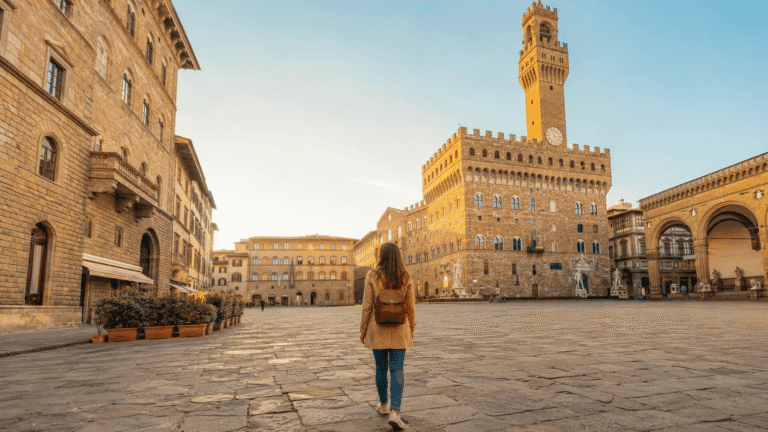
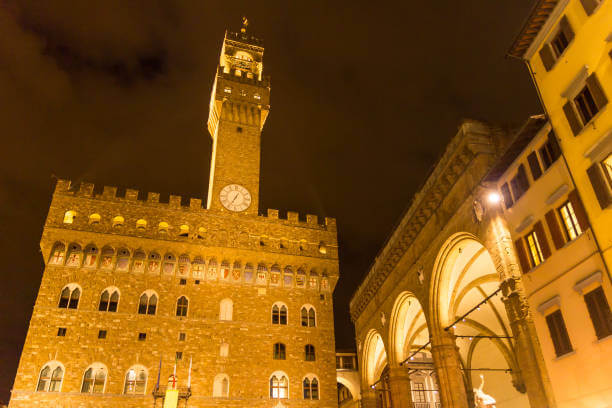
Built in the late 13th century, Palazzo Vecchio served as the residence of the Medici family and Florence’s seat of government. The Hall of Five Hundred inside features murals depicting Florence’s military victories. Outside, Piazza della Signoria is lined with sculptures Neptune’s Fountain, Perseus with the Head of Medusa, and a replica of Michelangelo’s David.
- Loggia dei Lanzi: Free open-air sculpture gallery do not miss
- Piazza della Signoria entry: Free
- Palazzo Vecchio interior: Ticketed €14
Ponte Vecchio
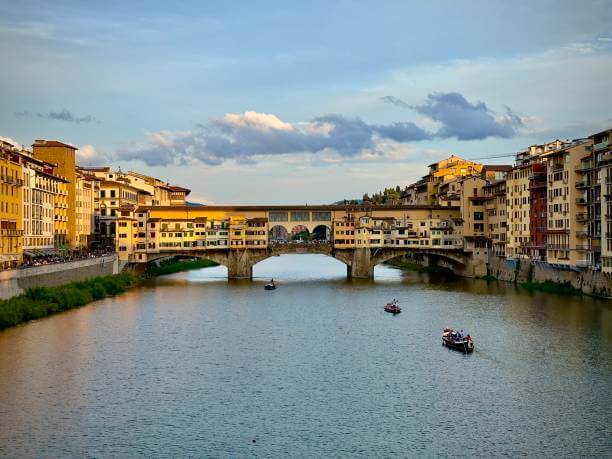
Florence’s oldest surviving bridge, dating to medieval times. Famous for its jewelry shops and artisan boutiques lining both sides historically these were butcher stalls until the Medici banned them. Above the bridge runs the Vasari Corridor, the secret elevated walkway built for Cosimo I de’ Medici.
- Entry: Free to cross
- Best time: Sunset the bridge and Arno glow amber
- Photography tip: Best angle from Ponte Santa Trinita or Ponte alle Grazie
Historic Churches Florence Religious Landmarks
Santa Maria Novella
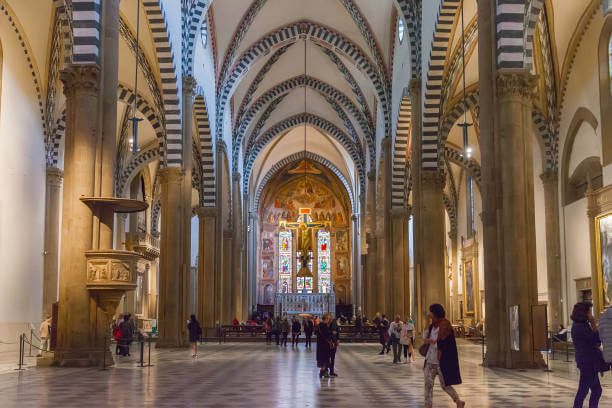
The Basilica of Santa Maria Novella is one of the most beautiful churches in Florence, featuring a striking marble façade designed by Leon Battista Alberti. Inside, visitors can admire the Spanish Chapel, adorned with vibrant frescoes illustrating theological virtues and scenes from Dominican history. The church also houses Masaccio’s Holy Trinity, a revolutionary early Renaissance fresco that showcases the artist’s mastery of perspective. Santa Maria Novella remains one of the key Florence tourist spots Italy, blending Gothic grace with Renaissance innovation.
San Lorenzo and Medici Chapels
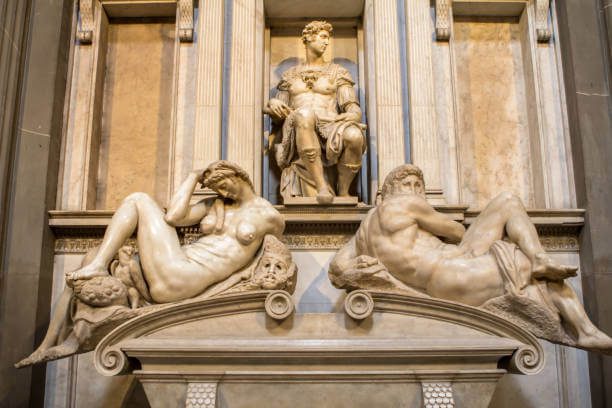
Designed by Brunelleschi, San Lorenzo is one of the earliest examples of Renaissance architecture. The attached Medici Chapels house Michelangelo’s New Sacristy with allegorical statues — Day, Night, Dawn, and Dusk — decorating the tombs of the Medici rulers.
- Opening hours: Tuesday–Saturday 8:15 AM–6:50 PM
- Cost: €9 (Medici Chapels)
San Miniato al Monte
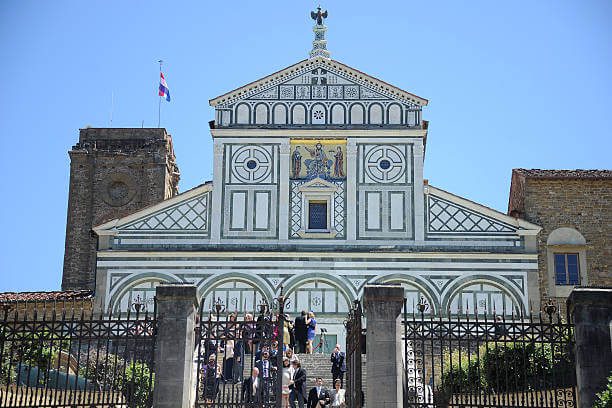
Perched above the city, San Miniato al Monte is one of the finest Romanesque churches in Italy with a green-and-white marble façade. The hilltop location offers one of the best panoramic views of Florence especially at sunset, when Benedictine monks chant Vespers at 5:30 PM.
- Best time: Arrive 30 minutes before sunset
- Entry: Free
- How to get there: Walk 10 minutes above Piazzale Michelangelo or take bus 12 or 13
panoramic view Florence Italy Romanesque
Basilica of Santa Croce
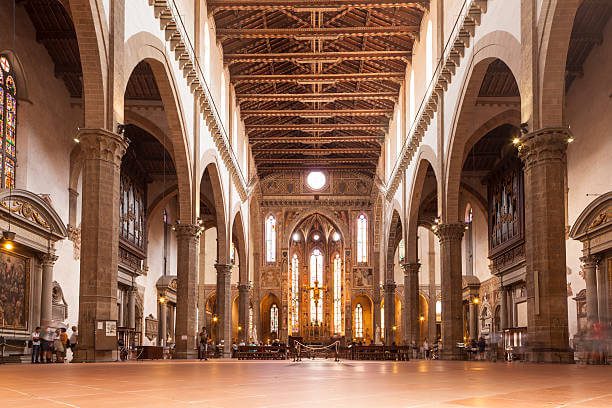
Called the Temple of Italian Glories, Santa Croce is the final resting place of Michelangelo, Galileo, Machiavelli, and Dante. The interior features Giotto’s frescoes and the Pazzi Chapel designed by Brunelleschi — one of the most perfectly proportioned spaces in Florence.
- Pro tip: The tombs of Michelangelo and Galileo are in the main nave — look for them on the right side
- Cost: €8
- Time needed: 60–90 minutes
Museums and Cultural Landmarks in Florence
Galileo Museum
Located near the Uffizi, the Museo Galileo celebrates Florence’s scientific legacy. Visitors see instruments used by Galileo himself — telescopes, globes, and experimental apparatus. One of the most fascinating Florence landmarks for science enthusiasts and an ideal alternative on days when art museum queues are long.
- Opening hours: Wednesday–Monday 9:30 AM–6 PM, Tuesday 9:30 AM–1 PM
- Cost: €10
Bargello Museum
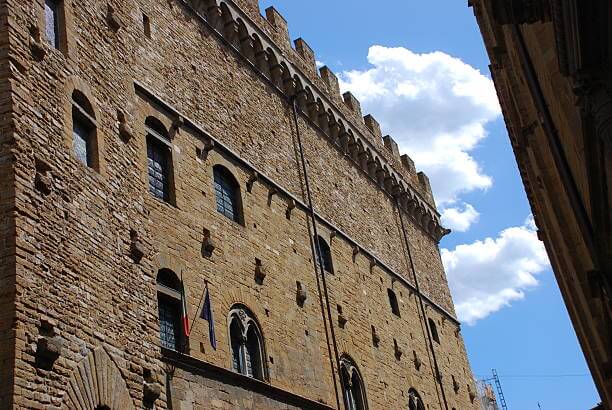
Once a medieval fortress and prison, the Bargello now houses extraordinary sculptures by Donatello, Michelangelo, and Verrocchio. Its intimate setting allows up-close appreciation of Florentine sculpture without the crowds of the larger museums.
- Pro tip: Donatello’s bronze David is here — not to be confused with Michelangelo’s marble David at the Accademia
- Cost: €10
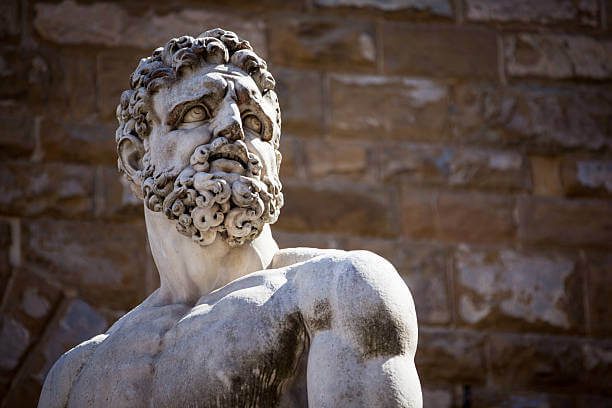
Palazzo Medici-Riccardi
Designed by Michelozzo for the Medici family, the interior features the Chapel of the Magi with frescoes by Benozzo Gozzoli depicting a glittering Renaissance parade. One of the most underrated Florence landmarks and rarely crowded.
- Opening hours: Thursday–Tuesday 9 AM–7 PM
- Cost: €10
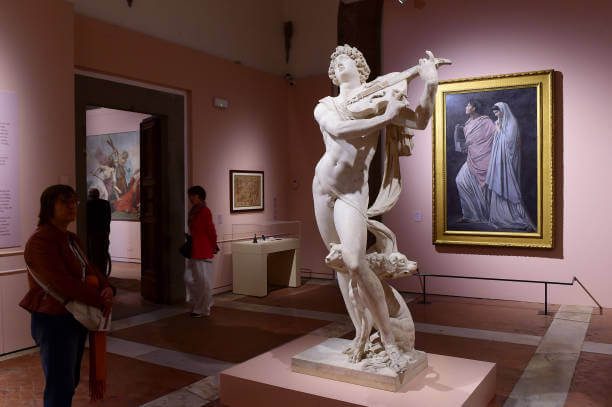
Historic Squares and Open-Air Landmarks
Piazzas of Florence
Florence’s historic piazzas are free open-air museums:
Piazza della Repubblica surrounds the ancient Roman forum, lined with historic cafés and grand arcaded buildings. Perfect for morning coffee and people-watching. Piazza Santissima Annunziata quieter and less visited, framed by Brunelleschi’s harmonious Renaissance arcades. One of the finest piazzas in Italy and largely unknown to first-time visitors.
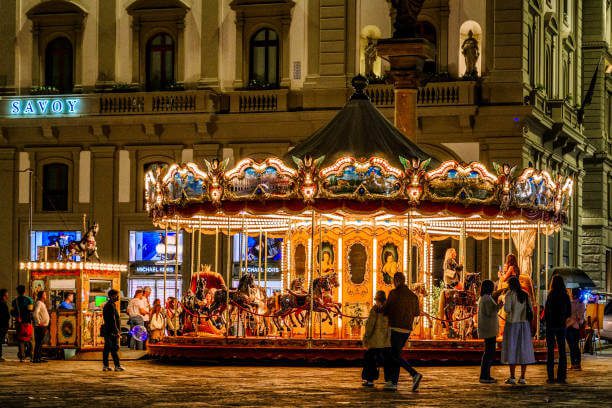
Loggia dei Lanzi
The Loggia dei Lanzi in Piazza della Signoria is a free open-air sculpture gallery showcasing Cellini’s Perseus with the Head of Medusa and Giambologna’s Rape of the Sabine Women. Entry is free. One of the most accessible Florence landmarks for art lovers on a budget.
Florence Food Markets and Cultural Experiences
Mercato Centrale Florence’s Food Hub
For authentic Florentine cuisine, the Mercato Centrale near San Lorenzo is essential. The ground floor sells fresh produce, meat, and cheese. The renovated upper floor hosts artisan food stalls serving fresh pasta, truffles, lampredotto sandwiches, and local wines.
For restaurant recommendations beyond the market, see our guide to the best restaurants in Florence.
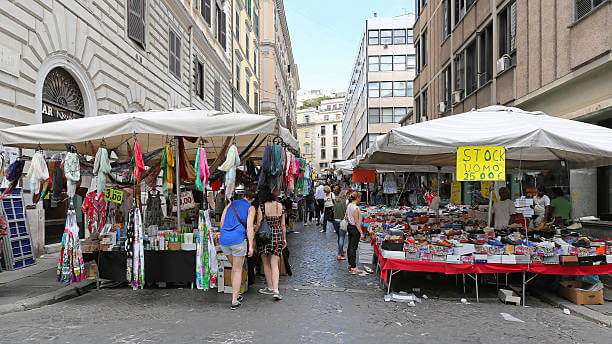
Brancacci Chapel
Located in the Church of Santa Maria del Carmine, the Brancacci Chapel is often called the “Sistine Chapel of the Located in Santa Maria del Carmine, the Brancacci Chapel contains Masaccio’s frescoes that directly influenced Michelangelo and Leonardo da Vinci. Entry is capped no long queues. One of the most important Renaissance art experiences in the city.
- Book in advance: Required limited visitors per slot
- Cost: €10
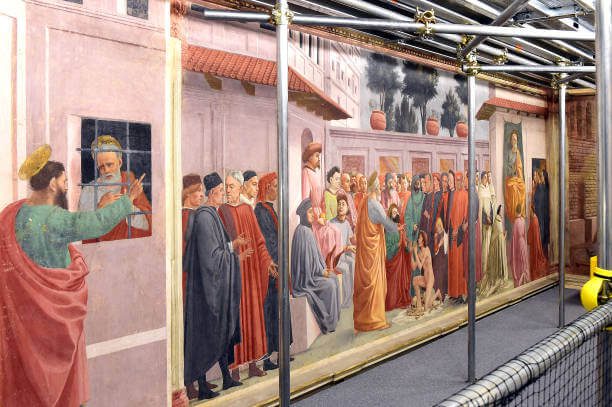
del Carmine Florence Italy Masaccio Renaissance
Day Trips from Florence
Beyond the city itself, several Florence landmarks make excellent half-day excursions into Tuscany.
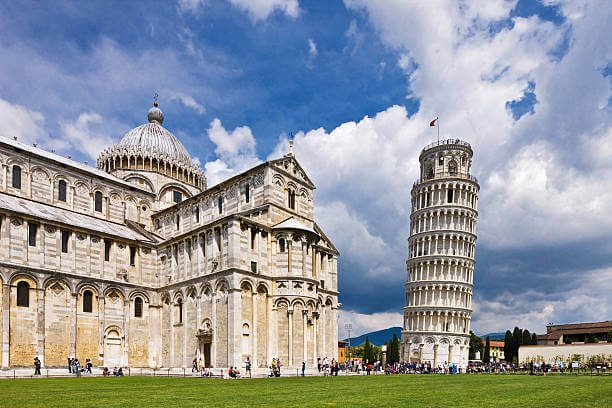
- Pisa: Leaning Tower of Pisa 1 hour by train
- Siena: Gothic architecture and Piazza del Campo 1.5 hours by train
- Lucca: Renaissance walls and cycling 1.5 hours by train
- Chianti Region: Vineyards, medieval castles, Tuscan wine 45 minutes by car
For a coastal day trip from Florence, our guide to things to do in Cinque Terre covers the full journey, and how to get to Cinque Terre explains the train routes and timings .
Practical Tips for Visiting Florence Landmarks
Planning which Florence landmarks to prioritize depends on your interests and available time.
Before planning your visit, read our guide on where to stay in Florence to choose the best neighborhood location makes a significant difference to how efficiently you can cover these landmarks on foot.
Use the Firenze Card
The Firenze Card gives priority entry to 60+ attractions including the Uffizi, Accademia, and Palazzo Vecchio. At €85 for 72 hours it pays off if you plan to visit 4 or more paid sites. Purchase online at firenzecard.it before arrival it sells out during peak season. For easy access to Florence’s top landmarks, consider purchasing the Firenze Card the city’s official museum pass that offers skip-the-line entry to 60+ attractions, including the Uffizi Gallery and Accademia Gallery.
Best Time to Visit Florence Landmarks
- April–June and September October: Best weather, manageable crowds
- July–August: Hot and very crowded book everything in advance, visit before 9 AM November–March: Fewer tourists, lower prices, shorter queues at all sites Daily best times: Before 9 AM or after 5 PM for all major landmarks
Plan Your Florence Itinerary Wisely
If you only have one day, follow our guide on [what to do in Florence in one day] which covers the Duomo, Uffizi, and Ponte Vecchio in a logical walking route. what to do in Florence in one day For a deeper experience, our 2 days in Florence itinerary . adds the Accademia, Boboli Gardens, Pitti Palace, and Piazzale Michelangelo sunset to create a complete two-day plan.
For official recommendations, itineraries, and travel routes, check the Tuscany Official Tourism Website a trusted guide to planning unforgettable day trips from Florence.
Don’t forget to venture on day trips to nearby gems like Siena, Pisa, Lucca, and the Chianti region, adding unforgettable experiences to your Italian adventure. Use our interactive map to plan walking tours and discover Florence’s clustered landmarks efficiently.
Exploring Florence Italy Landmarks is an unforgettable journey through history, art, and culture. From the iconic Duomo and Uffizi Gallery to the charming Ponte Vecchio, every corner of the city tells a story. Make the most of your visit with passes like the Firenze Card, and consider day trips to Siena, Pisa, Lucca, or the Chianti region for a complete Tuscan experience.
What are the most famous landmarks in Florence, Italy?
The most famous landmarks in Florence Italy are the Florence Cathedral (Duomo) with Brunelleschi’s dome, Michelangelo’s David at the Accademia Gallery, the Uffizi Gallery housing masterpieces by Botticelli and da Vinci, the medieval Ponte Vecchio bridge, and Piazza della Signoria the city’s historic civic heart surrounded by Renaissance sculpture and the open-air Loggia dei Lanzi.
What is the most iconic landmark in Florence Italy?
The Florence Cathedral, known as the Duomo or Santa Maria del Fiore, is the most iconic landmark in Florence Italy. Its terracotta dome designed by Filippo Brunelleschi in the 15th century dominates the city skyline and remains the largest masonry dome ever constructed. Entry to the cathedral is free. Climbing the dome requires an advance-booked ticket and 463 steps.
Which Florence landmarks are free to visit?
Several major Florence landmarks are completely free: the exterior of the Duomo and Baptistery, Piazza della Signoria, the Loggia dei Lanzi sculpture gallery, Ponte Vecchio, Piazza Santissima Annunziata, and San Miniato al Monte church. Walking the city’s historic streets, crossing its medieval bridges, and visiting its open piazzas costs nothing — and often provides the most memorable experiences.
How do I explore Florence landmarks efficiently?
The most efficient way to explore Florence landmarks is to stay in the historic center within walking distance of the Duomo, Uffizi, and Ponte Vecchio. Buy a Firenze Card for skip-the-line entry to 60+ sites. Visit the Duomo complex first thing in the morning, the Uffizi before lunch, and Piazza della Signoria in the afternoon. End at San Miniato al Monte for the best free sunset view in the city.
What are the best hidden landmarks in Florence?
The best hidden Florence landmarks include the Brancacci Chapel with Masaccio’s foundational Renaissance frescoes, the Bargello Museum for Donatello’s sculpture, the Galileo Museum near the Uffizi, Palazzo Medici-Riccardi with its Chapel of the Magi frescoes, and the Pazzi Chapel inside Santa Croce one of Brunelleschi’s most perfectly proportioned spaces and rarely crowded even in peak season.